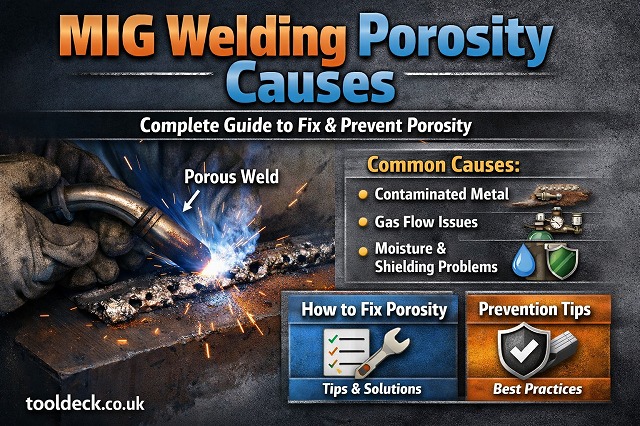
Porosity is one of the most common and frustrating defects in MIG welding. Those tiny holes or bubbles in your weld may seem minor, but they can significantly weaken the joint and compromise the overall quality of your work.
If you’re dealing with porous welds, don’t worry — the issue is usually easy to identify and fix.
In this guide, we’ll explain the main causes of MIG welding porosity, how to fix them, and practical steps to prevent it from happening again.
What Is Porosity in MIG Welding?
Porosity occurs when gas becomes trapped in the molten weld pool and solidifies as small holes or cavities.
Common signs include:
- Small holes in the weld bead
- Visible surface bubbles
- Weak or brittle welds
- Reduced structural strength
Main Causes of MIG Welding Porosity
1. Poor Shielding Gas Coverage
This is the most common cause of porosity.
If the shielding gas doesn’t properly protect the weld pool, air (oxygen, nitrogen) contaminates the weld.
👉 Fix:
- Set gas flow rate to 10–20 L/min
- Check for leaks in hoses and connections
- Keep the gas nozzle clean
- Avoid welding in windy or drafty conditions
2. Dirty or Contaminated Metal
Surface contaminants release gases when heated.
Common culprits:
- Rust
- Paint
- Oil or grease
👉 Fix:
- Clean the metal thoroughly before welding
- Use a grinder or wire brush
- Ensure a dry, clean surface
3. Incorrect Gas Type
Using the wrong shielding gas can increase porosity.
👉 Fix:
Use a suitable gas mixture such as:
- Argon/CO₂ mix (e.g. 75/25) for mild steel
- Ensure compatibility with your material
4. Gas Flow Too High or Too Low
Both extremes can cause problems:
- Too low → insufficient protection
- Too high → turbulence draws air into the weld
👉 Fix:
Adjust flow rate within recommended range and test.
5. Blocked or Dirty Gas Nozzle
Spatter build-up can restrict gas flow.
👉 Fix:
- Clean the nozzle regularly
- Replace if heavily clogged
6. Long Arc Length (Incorrect Stick-Out)
Excessive stick-out reduces shielding effectiveness.
👉 Fix:
Maintain a stick-out of 10–15 mm.
7. Moisture in Welding Wire or Gas
Moisture introduces hydrogen, leading to porosity.
👉 Fix:
- Store wire in a dry environment
- Avoid using damp or old wire
8. Leaks in Gas System
Even small leaks can compromise shielding.
👉 Fix:
- Inspect hoses, regulators, and fittings
- Tighten or replace faulty components
How to Fix Porosity in MIG Welding (Step-by-Step)
Step 1: Check Gas Supply
Ensure proper gas type, flow rate, and no leaks.
Step 2: Clean the Workpiece
Remove all contaminants from the metal surface.
Step 3: Inspect Equipment
Clean nozzle and check torch components.
Step 4: Adjust Technique
Maintain proper stick-out and consistent movement.
Step 5: Test Weld
Perform a trial weld and inspect results before continuing.
How to Prevent Porosity (Pro Tips)
- ✔ Always use clean materials
- ✔ Maintain proper gas coverage
- ✔ Keep equipment in good condition
- ✔ Store consumables correctly
- ✔ Avoid welding in windy environments
Quick Troubleshooting Checklist
- Shielding gas flowing correctly?
- Gas type appropriate?
- Metal clean and dry?
- Nozzle clean and unobstructed?
- Stick-out correct?
- No gas leaks present?
- Wire stored properly?
FAQs
What is the main cause of porosity in MIG welding?
Poor shielding gas coverage is the most common cause.
Can dirty metal cause porosity?
Yes. Contaminants release gases during welding, creating pores in the weld.
Does gas flow rate affect porosity?
Absolutely. Both too high and too low flow rates can lead to porosity.
How do I stop porosity completely?
Ensure proper gas coverage, clean materials, and correct technique.
Conclusion
MIG welding porosity is a common issue caused by gas problems, contamination, or incorrect technique. Fortunately, it’s easy to fix once you identify the root cause.
By following the steps in this guide and maintaining good welding practices, you can achieve clean, strong, and defect-free welds every time.

Leave a Reply