When using a stick welder (MMA), one of the most important things to understand is the difference between AC (Alternating Current) and DC (Direct Current) welding. Choosing the right current type can significantly affect arc stability, weld quality, and overall performance.
In this complete UK guide, we’ll break down AC vs DC stick welding, including how they work, their pros and cons, and which one is best for your needs.
Contents
- 🔧 What Is AC Stick Welding?
- 🔧 What Is DC Stick Welding?
- ⚖️ AC vs DC Stick Welding: Key Differences
- ⚙️ DC Polarity Explained (Important)
- ⚙️ Pros and Cons of AC Stick Welding
- ⚙️ Pros and Cons of DC Stick Welding
- 🧰 When to Use AC Welding
- 🧰 When to Use DC Welding
- 🧠 Which Is Better for Beginners in the UK?
- ⚡ Cost Comparison (UK Market)
- ❌ Common Mistakes to Avoid
- 🛡️ Safety Tips (Users)
- ❓ FAQs
🔧 What Is AC Stick Welding?
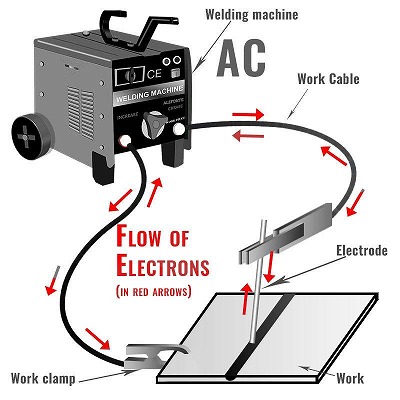
AC (Alternating Current) means the electrical current changes direction continuously, typically 50 times per second in the UK (50Hz mains supply).
Key characteristics:
- Arc alternates polarity rapidly
- Less stable arc compared to DC
- Reduced arc blow issues
- Common in older transformer welders
👉 AC welding is often used in basic or budget welding setups.
🔧 What Is DC Stick Welding?
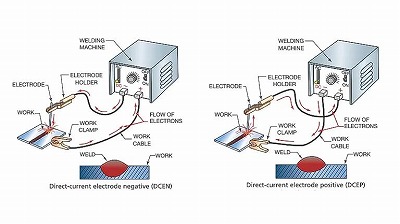
DC (Direct Current) flows in one constant direction, providing a more stable and controlled arc.
Key characteristics:
- Smooth, stable arc
- Easier to control
- Better weld quality
- Works with a wider range of electrodes
👉 Most modern inverter welders in the UK use DC.
⚖️ AC vs DC Stick Welding: Key Differences
| Feature | AC Welding | DC Welding |
|---|---|---|
| Current Type | Alternating | Constant |
| Arc Stability | Less stable | Very stable |
| Ease of Use | Harder | Easier |
| Weld Quality | Good | Excellent |
| Spatter | More | Less |
| Arc Blow | Minimal | Possible |
| Equipment | Cheaper | More advanced |
⚙️ DC Polarity Explained (Important)
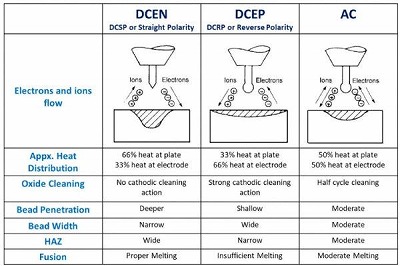
With DC welding, you can choose polarity:
🔹 DCEN (Direct Current Electrode Negative)
- More heat in the workpiece
- Deeper penetration
- Faster welding
🔹 DCEP (Direct Current Electrode Positive)
- More heat in the electrode
- Smoother arc
- Better for most stick welding
👉 Most stick welding uses DCEP (reverse polarity).
⚙️ Pros and Cons of AC Stick Welding
✅ Advantages:
- Lower equipment cost
- No arc blow issues (useful for magnetic materials)
- Works with basic transformer welders
- Simple setup
❌ Disadvantages:
- Unstable arc
- More spatter
- Harder for beginners
- Limited electrode compatibility
⚙️ Pros and Cons of DC Stick Welding
✅ Advantages:
- Smooth, stable arc
- Easier to learn and control
- Better weld quality
- Less spatter
- Works with more electrode types
❌ Disadvantages:
- More expensive machines
- Possible arc blow (rare but manageable)
🧰 When to Use AC Welding
AC welding is best for:
- Basic welding tasks
- Budget setups
- Situations with arc blow issues
- Older welding machines
👉 Suitable for occasional or light-duty use.
🧰 When to Use DC Welding
DC welding is ideal for:
- Beginners
- Professional welding work
- Thin or thick metal
- High-quality welds
- Most UK workshop environments
👉 This is the preferred choice for most users today.
🧠 Which Is Better for Beginners in the UK?
👉 DC welding is clearly better for beginners because:
- Easier arc starting
- More stable control
- Cleaner welds
- Less frustration
👉 Most modern UK welders (especially inverter machines) use DC for this reason.
⚡ Cost Comparison (UK Market)
- AC welders (basic transformer): cheaper
- DC welders (inverter): slightly higher cost but better performance
👉 The price difference is worth it for improved results.
❌ Common Mistakes to Avoid
❌ Using AC when DC is available
✔ Use DC for better control and quality
❌ Incorrect polarity (DC)
✔ Use DCEP for most stick welding
❌ Ignoring arc stability issues
✔ Adjust settings and technique accordingly
❌ Choosing the wrong machine
✔ Beginners should prioritise DC inverter welders
🛡️ Safety Tips (Users)
- Use EN379-approved welding helmet
- Ensure proper grounding
- Avoid damp conditions
- Maintain equipment properly
❓ FAQs
Is DC welding better than AC?
Yes — in most cases, DC provides better control and weld quality.
Why does AC welding have more spatter?
Because the arc constantly changes direction, making it less stable.
Can beginners use AC welding?
Yes, but it’s more difficult compared to DC.
🏁 Final Thoughts
When comparing AC vs DC stick welding, the choice is clear for most users:
- AC welding → simple, budget-friendly, but less stable
- DC welding → smoother, easier, and higher quality
For beginners and most UK welders, DC stick welding is the best option. It offers better control, cleaner welds, and a more enjoyable learning experience.


Leave a Reply