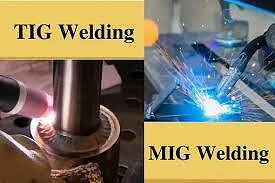
If you’re getting into welding, one of the first questions you’ll ask is: MIG vs TIG welding – which one is better? The answer depends on your skill level, budget, and the type of work you plan to do.
In this comprehensive UK-focused guide, we’ll break down the differences between MIG and TIG welding, including how they work, pros and cons, costs, and when to use each method.
Contents
What is MIG Welding?
MIG (Metal Inert Gas) welding uses a continuously fed wire electrode and shielding gas to create a weld.
Key Features:
- Easy to learn
- Fast welding process
- Uses a trigger-operated torch
- Ideal for beginners
👉 MIG is the most popular welding method for DIY and general fabrication in the UK.
What is TIG Welding?
TIG (Tungsten Inert Gas) welding uses a non-consumable tungsten electrode and requires a separate filler rod.
Key Features:
- High precision
- Cleaner welds
- More control
- Requires more skill
👉 TIG is commonly used for high-quality and precision work.
MIG vs TIG Welding: Key Differences
1. Ease of Use
- MIG Welding: Very beginner-friendly
- TIG Welding: Difficult to learn (requires coordination of both hands and foot pedal)
👉 Winner: MIG (best for beginners)
2. Weld Quality
- MIG: Good quality, but more spatter
- TIG: Extremely clean, precise welds
👉 Winner: TIG (best finish)
3. Welding Speed
- MIG: Fast and efficient
- TIG: Slow and detailed
👉 Winner: MIG (better for productivity)
4. Materials Compatibility
- MIG: Works well on steel and thicker materials
- TIG: Works on almost all metals (steel, aluminium, stainless steel)
👉 Winner: TIG (more versatile)
5. Thickness Handling
- MIG: Better for medium to thick metals
- TIG: Excellent for thin materials
👉 Winner: Depends:
- Thin metal → TIG
- Thick metal → MIG
6. Equipment Cost
- MIG Welders: Generally cheaper
- TIG Welders: More expensive (especially AC/DC machines)
👉 Winner: MIG (budget-friendly)
7. Cleanliness & Spatter
- MIG: More spatter, requires cleanup
- TIG: Very clean, almost no spatter
👉 Winner: TIG
Pros and Cons
MIG Welding Pros
- Easy for beginners
- Faster welding speed
- Lower equipment cost
- Great for DIY and automotive work
MIG Welding Cons
- Less precise
- More spatter
- Not ideal for very thin materials
TIG Welding Pros
- Highest weld quality
- Works on more materials
- Perfect for thin metal
- Clean finish (no spatter)
TIG Welding Cons
- Harder to learn
- Slower process
- Higher cost
When Should You Use MIG Welding?
Choose MIG if you:
- Are a beginner
- Want fast results
- Work with mild steel
- Do car repairs or DIY projects
- Need productivity over perfection
👉 MIG is perfect for garage work and general fabrication in the UK.
When Should You Use TIG Welding?
Choose TIG if you:
- Need clean, precise welds
- Work with aluminium or stainless steel
- Weld thin materials
- Care about appearance and detail
👉 TIG is ideal for professional, decorative, or high-end work.
MIG vs TIG for Aluminium
- MIG Aluminium: Faster but harder to control
- TIG Aluminium: Cleaner and more precise
👉 Winner: TIG (especially for thin aluminium)
MIG vs TIG for Beginners
If you’re just starting out:
👉 Go with MIG welding first
Why?
- Easier learning curve
- Lower cost
- Faster results
- Ideal for most DIY jobs
Once you gain experience, you can move to TIG for more advanced work.
Final Verdict: MIG vs TIG Welding
There’s no “better” option—only the right tool for the job.
- Choose MIG for speed, ease, and general use
- Choose TIG for precision, beauty, and thin materials
👉 Many professionals in the UK use both, depending on the project.
Final Thoughts
Understanding the difference between MIG and TIG welding is essential if you want to improve your skills and choose the right equipment. MIG is perfect for beginners and everyday projects, while TIG offers unmatched precision for detailed work.
If you’re building a workshop or starting a welding journey in the UK, the best approach is simple:
👉 Start with MIG → Master the basics → Upgrade to TIG later


Leave a Reply