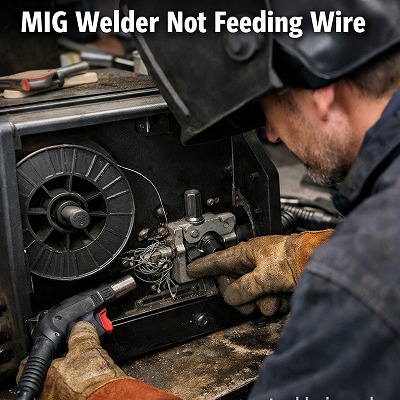
A MIG welder that won’t feed wire properly can bring your work to a complete halt. Whether the wire stops completely, feeds inconsistently, or slips, this issue is both common and frustrating.
The good news? In most cases, it’s easy to diagnose and fix.
In this guide, you’ll learn why your MIG welder is not feeding wire and how to apply simple, effective fixes to get back to smooth, reliable welding.
Contents
Why Is My MIG Welder Not Feeding Wire?
Wire feed problems usually come down to mechanical resistance, incorrect settings, or worn components. Identifying the exact cause is key to solving the issue quickly.
Common Causes of MIG Welder Wire Feed Problems
1. Incorrect Drive Roll Tension
Drive rolls are responsible for pushing the wire through the system. If the tension is off:
- Too loose → wire slips and won’t feed
- Too tight → wire gets crushed or deformed
👉 Fix:
Adjust the tension gradually:
- Tighten until the wire feeds consistently
- Avoid overtightening to prevent damage
2. Blocked or Worn Liner
The liner guides the wire from the spool to the torch. Dirt, dust, or metal shavings can clog it.
👉 Fix:
- Remove and clean the liner with compressed air
- Replace it if it’s worn or heavily contaminated
3. Tangled or Poorly Installed Wire Spool
If the spool isn’t installed correctly, the wire may snag or stop feeding altogether.
👉 Fix:
- Check for tangles (“bird nesting”)
- Ensure the spool rotates freely
- Reinstall the wire properly
4. Worn or Incorrect Contact Tip
A damaged or incorrectly sized contact tip can block wire movement.
👉 Fix:
- Replace the tip with the correct size for your wire
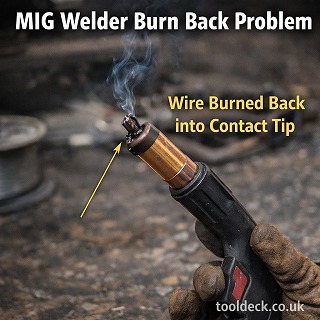
- Inspect regularly for wear and burnback
5. Dirty or Rusty Welding Wire
Contaminated wire increases friction and prevents smooth feeding.
👉 Fix:
- Use clean, high-quality wire
- Store wire in a dry place
- Replace rusty spools immediately
6. Faulty Drive Rolls
Over time, drive rolls can wear out and lose grip on the wire.
👉 Fix:
- Inspect for wear or smooth spots
- Replace if necessary
- Ensure correct roll type (knurled vs smooth) for your wire
7. Incorrect Wire Feed Speed Settings
Improper settings can cause erratic feeding or complete stoppage.
👉 Fix:
Adjust the wire feed speed according to:
- Material thickness
- Voltage settings
- Manufacturer recommendations
8. Cable or Torch Issues
Sharp bends or damage in the cable can restrict wire movement.
👉 Fix:
- Keep the cable as straight as possible
- Inspect for internal damage
- Replace faulty torch components
Step-by-Step Troubleshooting Guide
If your MIG welder is not feeding wire, follow this process:
Step 1: Check the Wire Spool
- Ensure it’s not tangled
- Confirm smooth rotation
Step 2: Inspect Drive Rolls
- Check tension
- Look for wear
Step 3: Examine the Liner
- Clean or replace if needed
Step 4: Replace the Contact Tip
- Use correct size
- Check for blockages
Step 5: Test Settings
- Adjust wire feed speed
- Balance with voltage
Pro Tips to Prevent Wire Feed Issues
- ✔ Perform regular maintenance
- ✔ Keep all components clean
- ✔ Replace consumables before they fail
- ✔ Use high-quality welding wire
- ✔ Avoid sharp bends in the torch cable
Quick Checklist
Use this checklist for fast diagnosis:
- Wire spool installed correctly
- No tangles or bird nesting
- Drive roll tension correct
- Liner clean and clear
- Contact tip in good condition
- Wire free from rust or dirt
- Cable not bent or damaged
FAQs
Why is my MIG welder making noise but not feeding wire?
This usually indicates slipping drive rolls or a blockage in the liner.
What causes bird nesting in MIG welding?
Bird nesting occurs when wire feeds unevenly and bunches up, often due to incorrect tension or a blocked liner.
How do I know if my liner is bad?
Signs include inconsistent feeding, increased resistance, and visible debris inside the liner.
Can incorrect settings stop wire feeding completely?
Yes. Extremely low or high wire feed settings can disrupt proper operation.
Conclusion
When your MIG welder is not feeding wire, the issue is typically caused by mechanical resistance, incorrect setup, or worn components. Fortunately, most problems can be resolved quickly with basic troubleshooting.
By following this guide and maintaining your equipment regularly, you can ensure smooth, reliable wire feeding and better weld quality every time.
Leave a Reply