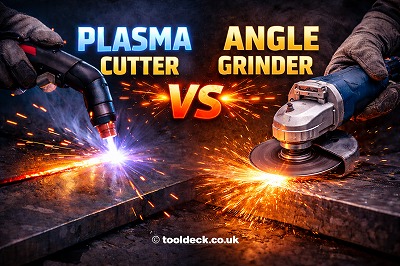
When it comes to cutting metal in the UK, two of the most commonly used tools are the plasma cutter and the angle grinder. Both are widely used in workshops, garages, and construction sites—but they are designed for very different types of work.
So, which one should you choose?
In this complete guide to plasma cutter vs angle grinder, we’ll break down:
- How each tool works
- Key differences in performance
- Pros and cons
- Best use cases
- Which tool is right for your needs
Contents
- ⚠️ Why Choosing the Right Cutting Tool Matters
- 🔍 What Is a Plasma Cutter?
- 🔍 What Is an Angle Grinder?
- ⚙️ Plasma Cutter vs Angle Grinder – Key Differences
- 🛠️ When Should You Use a Plasma Cutter?
- 🛠️ When Should You Use an Angle Grinder?
- ⚠️ Plasma Cutter vs Angle Grinder – Real-World Use
- 🔄 Do You Need Both Tools?
- 🧠 Pro Tips for Users
- ❌ Common Mistakes to Avoid
- 🛡️ Safety Considerations
- ❓ FAQs
⚠️ Why Choosing the Right Cutting Tool Matters

Using the wrong tool can lead to:
- Rough or uneven cuts
- Wasted materials
- Increased work time
- Safety risks
👉 Understanding the difference between a plasma cutter vs angle grinder helps you work faster, safer, and more efficiently.
🔍 What Is a Plasma Cutter?
A plasma cutter is a machine that uses a high-temperature plasma arc to cut through conductive metals.
⚙️ How It Works:
- Compressed air is ionised into plasma
- Plasma reaches temperatures of up to 25,000°C
- The arc melts metal and blows it away
🔩 Materials It Can Cut:
- Mild steel
- Stainless steel
- Aluminium
- Copper
👉 Plasma cutters are ideal for fast, clean, and precise metal cutting.
✅ Advantages of Plasma Cutters
- Very fast cutting speed
- Clean, smooth edges
- High precision
- Minimal effort required
❌ Disadvantages of Plasma Cutters
- Higher cost
- Requires power and air supply
- Less portable
🔍 What Is an Angle Grinder?
An angle grinder is a handheld power tool that uses a rotating disc to cut, grind, or polish materials.
⚙️ How It Works:
- Motor spins cutting disc at high speed
- Disc cuts through metal via abrasion
🔧 Common Uses:
- Cutting metal bars and sheets
- Grinding welds
- Removing rust
- Surface finishing
👉 Angle grinders are versatile and widely used across the UK.
✅ Advantages of Angle Grinders
- Affordable
- Highly portable
- Multi-purpose tool
- Easy to use
❌ Disadvantages of Angle Grinders
- Slower cutting
- Rougher edges
- More effort required
- Generates more sparks and debris
⚙️ Plasma Cutter vs Angle Grinder – Key Differences
🔹 1. Cutting Mechanism (How Each Tool Works)
🔥 Plasma Cutter:
- Uses an electrically conductive plasma arc
- Air is ionised into plasma at extremely high temperatures
- The arc melts metal and blows it away instantly
⚙️ Angle Grinder:
- Uses a high-speed rotating abrasive disc
- The disc grinds through metal via friction
👉 Key Difference:
Plasma cutting is a thermal process, while grinding is a mechanical abrasion process.
🔹 2. Cutting Speed
Plasma Cutter:
- Extremely fast, especially on thin to medium metals
- Can slice through steel in seconds
- Maintains consistent speed across long cuts
Angle Grinder:
- Slower and more labour-intensive
- Speed depends on user pressure and disc quality
- Takes longer on thicker materials
👉 Verdict: Plasma cutter is significantly faster, especially for repetitive or large-scale cutting.
🔹 3. Cut Quality & Edge Finish
Plasma Cutter:
- Produces clean, smooth edges
- Minimal burrs
- Often requires little to no finishing
Angle Grinder:
- Produces rougher edges
- Leaves burrs and uneven lines
- Usually requires additional grinding or sanding
👉 Verdict: Plasma cutter delivers professional-quality cuts, while grinders often require post-processing.
🔹 4. Precision & Control
Plasma Cutter:
- High precision, especially with guides or CNC systems
- Ideal for detailed cuts and shapes
Angle Grinder:
- Lower precision
- Harder to maintain straight lines
- Depends heavily on user skill
👉 Verdict: Plasma cutter is far more accurate for fabrication work.
🔹 5. Material Thickness Capability
Plasma Cutter:
- Excellent for thin to medium thickness
- Can handle thicker metals depending on amperage
Angle Grinder:
- Can cut thick metal, but slowly
- Requires more effort and multiple passes
👉 Verdict: Both can cut thick metal, but plasma cutters do it faster and cleaner.
🔹 6. Portability & Ease of Use
Plasma Cutter:
- Requires power supply and often compressed air
- Less portable
- Setup time required
Angle Grinder:
- Highly portable
- Plug-and-play
- Ideal for on-site work
👉 Verdict: Angle grinder wins for portability and convenience.
🔹 7. Versatility
Plasma Cutter:
- Primarily for cutting metal
- Limited to conductive materials
Angle Grinder:
- Multi-purpose tool:
- Cutting
- Grinding
- Polishing
- Surface preparation
👉 Verdict: Angle grinder is far more versatile.
🔹 8. Cost & Running Expenses
Plasma Cutter:
- Higher initial cost
- Consumables (tips, electrodes)
- May require compressor
Angle Grinder:
- Low initial cost
- Cheap cutting discs
- Minimal maintenance
👉 Verdict: Angle grinder is more budget-friendly.
🔹 9. Safety & Risk Factors
Plasma Cutter:
- Intense arc and heat
- UV radiation exposure
- Requires proper PPE (helmet, gloves)
Angle Grinder:
- Flying sparks and debris
- Risk of disc breakage
- Kickback hazard
👉 Verdict: Both tools are dangerous if misused, but grinders pose more physical injury risks, while plasma cutters involve arc and heat hazards.
🔹 10. Best Use Cases
Plasma Cutter:
- Fabrication workshops
- Automotive bodywork
- Clean, precise cuts
Angle Grinder:
- DIY repairs
- On-site cutting
- Finishing and grinding
👉 Verdict: Plasma cutters are best for precision work, grinders for versatility.
Summary of Key Differences
| Category | Plasma Cutter | Angle Grinder |
|---|---|---|
| Cutting Method | Thermal (plasma arc) | Mechanical (abrasion) |
| Speed | Very fast | Moderate |
| Cut Quality | Clean | Rough |
| Precision | High | Medium |
| Portability | Low | High |
| Versatility | Low | High |
| Cost | Higher | Lower |
👉 In short:
- Plasma cutter = precision + speed
- Angle grinder = flexibility + affordability
🛠️ When Should You Use a Plasma Cutter?
Use a plasma cutter for:
- Cutting sheet metal
- Precision fabrication
- Automotive work
- Clean, professional results
👉 Best for workshop environments.
🛠️ When Should You Use an Angle Grinder?
Use an angle grinder for:
- Quick cuts
- Grinding welds
- DIY repairs
- Working on-site
👉 Best for versatility and portability.
⚠️ Plasma Cutter vs Angle Grinder – Real-World Use
🔧 Fabrication Workshop:
- Plasma cutter for cutting
- Grinder for finishing
🏠 DIY Projects:
- Angle grinder is often enough
🚗 Automotive Work:
- Plasma cutter preferred for precision
👉 Most professionals use both tools together.
🔄 Do You Need Both Tools?
✔ Ideal Setup:
- Plasma cutter → cutting
- Angle grinder → finishing
👉 Together, they provide complete metalworking capability.
🧠 Pro Tips for Users
- Use plasma cutter for clean cuts
- Use grinder for cleanup and finishing
- Always wear PPE (gloves, eye protection)
- Keep discs and consumables in good condition
- Work in well-ventilated areas
❌ Common Mistakes to Avoid
❌ Using grinder for precision cutting
✔ Use plasma cutter
❌ Expecting clean cuts from grinder
✔ Always finish after cutting
❌ Ignoring safety
✔ Sparks and debris are dangerous
🛡️ Safety Considerations
Plasma Cutter:
- High heat
- Electrical hazards
- Bright arc
Angle Grinder:
- Flying debris
- Disc breakage risk
- Sparks
👉 Always use proper PPE.
❓ FAQs
Which is better: plasma cutter or angle grinder?
Depends on the task — cutting vs versatility.
Is plasma cutting worth it?
Yes, for precision and speed.
Can an angle grinder replace a plasma cutter?
Not for clean or precise cuts.
What tool should beginners choose?
Angle grinder for budget, plasma cutter for performance.
Final Thoughts
Understanding the difference between a plasma cutter vs angle grinder helps you choose the right tool for your project. Plasma cutters deliver speed and precision, while angle grinders offer flexibility and affordability — and most UK users benefit from having both.


Leave a Reply