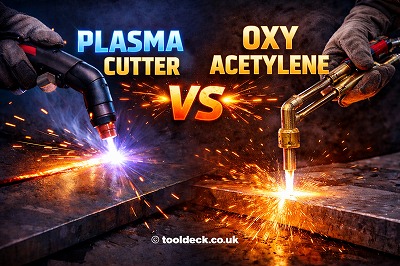
When it comes to cutting metal, two of the most widely used methods in the UK are the plasma cutter and oxy-acetylene cutting. Both are powerful tools used in workshops, construction, and fabrication—but they operate in completely different ways and are suited to different applications.
So which one should you choose?
In this complete guide to plasma cutter vs oxy acetylene, we’ll cover:
- How each method works
- Key differences in performance
- Pros and cons
- Best use cases
- Which option is best for your needs
Contents
- ⚠️ Why Choosing the Right Cutting Method Matters
- 🔍 What Is a Plasma Cutter?
- 🔍 What Is Oxy-Acetylene Cutting?
- ⚙️ How It Works:
- 🔩 Materials It Can Cut:
- ✅ Advantages of Oxy-Acetylene
- ❌ Disadvantages of Oxy-Acetylene
- 🔹 1. Cutting Mechanism (Technology & Process)
- 🔹 2. Cutting Speed
- 🔹 3. Cut Quality & Edge Finish
- 🔹 4. Material Compatibility
- 🔹 5. Thickness Capability
- 🔹 6. Heat-Affected Zone (HAZ)
- 🔹 7. Portability & Setup
- 🔹 8. Cost & Running Expenses
- 🔹 9. Safety Considerations
- 🔹 10. Versatility & Applications
- Summary of Key Differences
- 🛠️ When Should You Use a Plasma Cutter?
- 🛠️ When Should You Use Oxy-Acetylene?
- 🔄 Do You Need Both?
- 🧠 Pro Tips for Users
- ❌ Common Mistakes to Avoid
- 🛡️ Safety Considerations
- ❓ FAQs
⚠️ Why Choosing the Right Cutting Method Matters
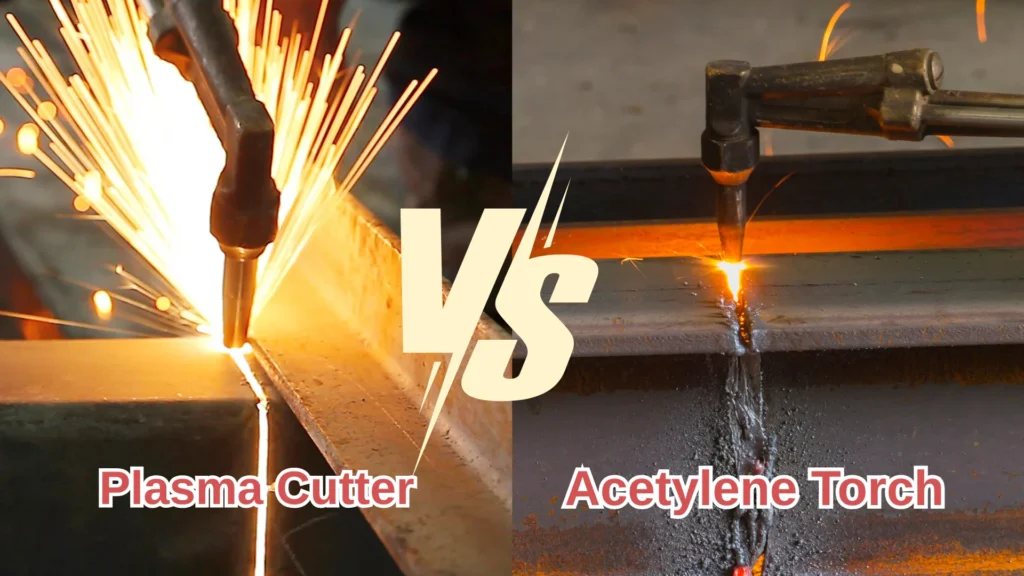
Using the wrong cutting method can result in:
- Poor cut quality
- Excessive material waste
- Slower work time
- Increased costs
👉 Understanding the difference between a plasma cutter vs oxy acetylene helps you work more efficiently and safely.
🔍 What Is a Plasma Cutter?
A plasma cutter is an electric tool that uses a high-temperature plasma arc to cut through conductive metals.
⚙️ How It Works:
- Gas (usually air) is ionised into plasma
- Plasma reaches temperatures of up to 25,000°C
- The arc melts metal and blows it away
🔩 Materials It Can Cut:
- Mild steel
- Stainless steel
- Aluminium
- Copper
👉 Ideal for clean, fast, and precise cutting.
✅ Advantages of Plasma Cutters
- Fast cutting speed
- Clean and smooth edges
- High precision
- Minimal heat distortion
❌ Disadvantages of Plasma Cutters
- Requires electricity
- Higher initial cost
- Needs air supply (for many models)
🔍 What Is Oxy-Acetylene Cutting?
Oxy-acetylene cutting (also called gas cutting) uses a fuel gas flame combined with oxygen to cut metal.
⚙️ How It Works:
- Acetylene gas burns with oxygen
- Produces a high-temperature flame (~3,500°C)
- Oxygen jet oxidises and removes molten metal
🔩 Materials It Can Cut:
- Mild steel (primarily)
👉 Best for cutting thick steel in heavy-duty applications.
✅ Advantages of Oxy-Acetylene
- No electricity required
- Excellent for thick steel
- Highly portable
- Multi-purpose (cutting, heating, brazing)
❌ Disadvantages of Oxy-Acetylene
- Rougher cuts
- Slower than plasma
- Limited to certain metals
- Higher heat distortion
⚙️ Plasma Cutter vs Oxy Acetylene – Key Differences
🔹 1. Cutting Mechanism (Technology & Process)
⚡ Plasma Cutter:
- Uses an electrical arc to ionise gas into plasma
- Plasma reaches extremely high temperatures (~25,000°C)
- Melts metal and ejects it using high-velocity gas
🔥 Oxy-Acetylene:
- Uses a chemical reaction (oxidation)
- Flame heats metal to ignition temperature
- Oxygen jet burns and removes the metal
👉 Key Difference:
Plasma cutting is a thermal-electric process, while oxy-acetylene is a chemical combustion process.
🔹 2. Cutting Speed
Plasma Cutter:
- Extremely fast on thin and medium metals
- Maintains consistent speed across long cuts
- Ideal for production work
Oxy-Acetylene:
- Slower overall
- Requires preheating before cutting
- Can be efficient on very thick steel
👉 Verdict: Plasma cutter is significantly faster in most everyday applications.
🔹 3. Cut Quality & Edge Finish
Plasma Cutter:
- Produces clean, narrow cuts (thin kerf)
- Minimal slag or dross
- Requires little finishing
Oxy-Acetylene:
- Produces wider cuts (thicker kerf)
- Leaves more slag and oxidation
- Often requires grinding after cutting
👉 Verdict: Plasma cutter delivers much cleaner and more precise results.
🔹 4. Material Compatibility
Plasma Cutter:
- Works on all electrically conductive metals, including:
- Steel
- Stainless steel
- Aluminium
- Copper
Oxy-Acetylene:
- Works best on mild steel only
- Cannot effectively cut:
- Aluminium
- Stainless steel
👉 Verdict: Plasma cutter is far more versatile.
🔹 5. Thickness Capability
Plasma Cutter:
- Excellent for thin to medium thickness
- Can cut thicker metal with high-power machines
- Less efficient on very thick steel
Oxy-Acetylene:
- Ideal for very thick steel (50mm+)
- Common in heavy industry and construction
👉 Verdict: Oxy-acetylene is better for extremely thick materials.
🔹 6. Heat-Affected Zone (HAZ)
Plasma Cutter:
- Narrow heat-affected zone
- Less warping or distortion
Oxy-Acetylene:
- Large heat-affected zone
- Higher risk of warping
👉 Verdict: Plasma cutter is better for precision work and thin materials.
🔹 7. Portability & Setup
Plasma Cutter:
- Requires electricity
- Often needs compressed air
- Setup is more complex
Oxy-Acetylene:
- Fully portable (gas cylinders)
- No electrical power needed
- Quick to deploy in remote locations
👉 Verdict: Oxy-acetylene is better for on-site and outdoor work.
🔹 8. Cost & Running Expenses
Plasma Cutter:
- Higher initial investment
- Lower long-term running costs
- Consumables: electrodes, tips
Oxy-Acetylene:
- Lower initial setup cost
- Ongoing gas costs (oxygen + acetylene)
- Requires cylinder refills
👉 Verdict: Plasma is cheaper long-term; gas cutting is cheaper upfront.
🔹 9. Safety Considerations
Plasma Cutter:
- High voltage and electric arc
- UV radiation exposure
- Hot sparks and molten metal
Oxy-Acetylene:
- Fire and explosion risk
- Gas leaks
- Open flame hazards
👉 Verdict: Both require strict safety procedures, but oxy-acetylene involves greater fire risk.
🔹 10. Versatility & Applications
Plasma Cutter:
- Best for:
- Fabrication
- Automotive work
- Precision cutting
Oxy-Acetylene:
- Multi-purpose tool:
- Cutting
- Heating
- Brazing
- Bending metal
👉 Verdict: Oxy-acetylene is more versatile beyond cutting.
Summary of Key Differences
| Category | Plasma Cutter | Oxy-Acetylene |
|---|---|---|
| Cutting Method | Plasma arc | Gas combustion |
| Speed | Very fast | Moderate |
| Cut Quality | Clean | Rough |
| Materials | Many metals | Mostly steel |
| Thickness | Thin–medium | Very thick steel |
| Portability | Low | High |
| Cost | Higher upfront | Ongoing gas cost |
👉 In short:
- Plasma cutter = precision, speed, versatility
- Oxy-acetylene = power, portability, thick steel cutting
🛠️ When Should You Use a Plasma Cutter?
Use a plasma cutter for:
- Sheet metal cutting
- Automotive work
- Fabrication projects
- Clean, precise cuts
👉 Ideal for workshops and precision work.
🛠️ When Should You Use Oxy-Acetylene?
Use oxy-acetylene for:
- Cutting thick steel
- Outdoor or remote work
- Heating and bending metal
- Heavy-duty applications
👉 Ideal for construction and industrial work.
🔄 Do You Need Both?
✔ In many UK workshops:
Yes — because:
- Plasma cutter → precision cutting
- Oxy-acetylene → heavy-duty cutting
👉 They complement each other.
🧠 Pro Tips for Users
- Use plasma cutter for clean, fast jobs
- Use oxy-acetylene for thick steel
- Maintain equipment regularly
- Always use proper PPE
- Work in ventilated areas
❌ Common Mistakes to Avoid
❌ Using oxy-acetylene for precision work
✔ Use plasma cutter
❌ Using plasma cutter for very thick steel
✔ Use gas cutting
❌ Ignoring safety
✔ Both tools are hazardous
🛡️ Safety Considerations
Plasma Cutter:
- Electrical hazards
- UV radiation
- Hot sparks
Oxy-Acetylene:
- Fire risk
- Gas leaks
- Explosion hazards
👉 Always follow safety procedures.
❓ FAQs
Which is better: plasma cutter or oxy-acetylene?
Depends on thickness and application.
Is plasma cutting more accurate?
Yes — significantly.
Can oxy-acetylene cut all metals?
No — mainly steel.
Which is cheaper long-term?
Plasma cutter (lower running cost).
Final Thoughts
When comparing a plasma cutter vs oxy acetylene, plasma cutters offer speed, precision, and versatility, while oxy-acetylene excels in cutting thick steel and working in remote environments. Choosing the right method depends on your specific needs and projects.




Leave a Reply