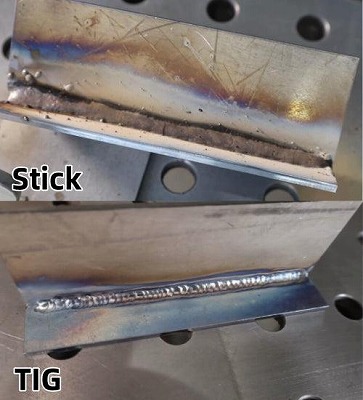
Choosing between stick welding (MMA) and TIG welding can be confusing, especially for beginners in the UK. Both methods are widely used, but they serve very different purposes depending on your skill level, materials, and working environment.
In this guide, we’ll break down the key differences between stick vs TIG welding, including pros, cons, applications, and which one is right for you.
Contents
🔧 What Is Stick Welding (MMA)?
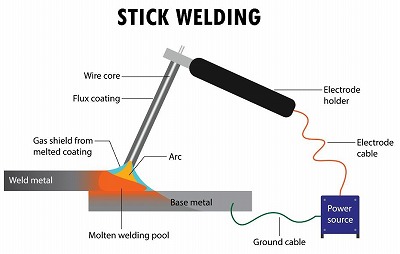
Stick welding, also known as MMA (Manual Metal Arc), uses a consumable electrode coated in flux to create an arc and weld metal.
Key features:
- No external gas required
- Works well outdoors
- Tolerates rust and dirty metal
- Produces slag that must be cleaned
👉 It’s one of the most common welding methods in the UK for repairs and construction.
🔧 What Is TIG Welding?
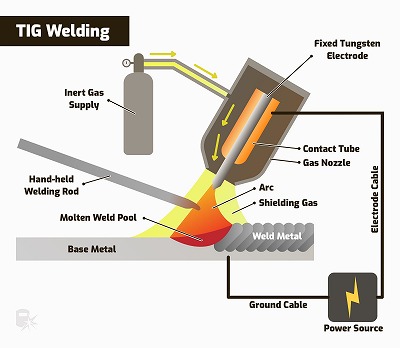
TIG welding (Tungsten Inert Gas) uses a non-consumable tungsten electrode and shielding gas (usually argon) to produce clean, precise welds.
Key features:
- Extremely clean welds (no slag)
- Requires shielding gas
- Greater control and precision
- Slower process
👉 Widely used for stainless steel, aluminium, and high-quality fabrication.
⚖️ Stick vs TIG Welding: Key Differences
| Feature | Stick Welding (MMA) | TIG Welding |
|---|---|---|
| Ease of Use | Easy (beginner-friendly) | Difficult (requires skill) |
| Equipment Cost | Low | Higher |
| Portability | High | Low (gas required) |
| Weld Quality | Good | Excellent |
| Speed | Faster | Slower |
| Outdoor Use | Excellent | Poor (wind affects gas) |
| Metal Cleanliness | Works on dirty metal | Requires clean metal |
| Slag | Yes | No |
⚙️ Pros and Cons of Stick Welding
✅ Advantages:
- Affordable equipment
- Easy to learn
- Great for outdoor UK conditions
- Works on rusty or painted steel
- Portable and simple setup
❌ Disadvantages:
- Less precise than TIG
- Produces slag (extra cleaning)
- More spatter
- Not ideal for thin materials
⚙️ Pros and Cons of TIG Welding
✅ Advantages:
- Very clean, professional welds
- No slag or spatter
- Ideal for thin metal and detailed work
- Excellent for stainless steel and aluminium
❌ Disadvantages:
- Slower process
- More expensive equipment
- Requires shielding gas
- Harder to learn (coordination needed)
- Not suitable for windy outdoor environments
🧰 When to Use Stick Welding
Stick welding is best for:
- Outdoor welding jobs
- Structural steel work
- Farm repairs and maintenance
- DIY projects
- Thick steel
👉 Ideal for UK users working in garages, sites, or unpredictable weather.
🧰 When to Use TIG Welding
TIG welding is best for:
- Thin metal
- Stainless steel and aluminium
- Precision fabrication
- Automotive and custom work
- Aesthetic welds
👉 Perfect when appearance and quality matter most.
🧠 Which Is Better for Beginners in the UK?
👉 Choose Stick Welding if:
- You’re a beginner
- You want a low-cost setup
- You work outdoors
- You need versatility
👉 Choose TIG Welding if:
- You want high-quality, clean welds
- You’re working with thin or delicate materials
- You’re willing to invest time learning
👉 For most beginners, stick welding is the best starting point.
⚡ Cost Comparison
- Stick welder: £80 – £200 (budget range)
- TIG welder: £200 – £600+
- Gas (argon): ongoing cost
👉 Stick welding is significantly cheaper to start.
🛡️ Safety Considerations
Both methods require proper PPE:
- EN379 welding helmet
- Gloves and protective clothing
- Ventilation (especially for indoor welding)
👉 TIG produces less spatter, but both processes are hazardous without protection.
❓ FAQs
Is TIG welding stronger than stick welding?
Both can produce strong welds, but TIG is more precise and cleaner. Stick welding is often better for heavy-duty applications.
Can beginners learn TIG welding easily?
It’s possible, but it takes more time and coordination than stick welding.
Which is better for outdoor use in the UK?
Stick welding — TIG is affected by wind due to shielding gas.
🏁 Final Thoughts
When comparing stick vs TIG welding, there is no single “best” option — it depends on your needs.
- Stick welding → practical, affordable, and versatile
- TIG welding → precise, clean, and professional
For most UK beginners, starting with stick welding is the smartest choice. As your skills improve, you can explore TIG welding for more advanced and detailed work.

Leave a Reply