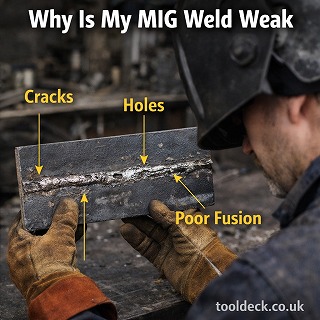
A weak MIG weld is more than just a cosmetic issue — it can compromise the structural integrity of your work and lead to costly failures. Whether you’re a beginner or an experienced welder, weak welds are a common problem that can usually be fixed with the right adjustments.
In this guide, we’ll explore why your MIG weld is weak, along with practical solutions and expert tips to help you produce strong, reliable welds every time.
Contents
What Causes a Weak MIG Weld?
Weak welds typically result from poor penetration, contamination, or incorrect technique. Understanding these root causes will help you quickly identify and fix the issue.
Common Causes of Weak MIG Welds
1. Insufficient Heat (Low Voltage Settings)
One of the most common reasons for weak welds is not enough heat.
- Poor penetration into the base metal
- Weld sits on top rather than fusing properly
👉 Fix:
- Increase voltage slightly
- Adjust wire feed speed accordingly
- Perform test welds before final work
2. Incorrect Travel Speed
Your welding speed plays a crucial role:
- Too fast → weak, thin weld with poor fusion
- Too slow → excessive build-up and possible defects
👉 Fix:
Maintain a steady, controlled travel speed for proper fusion.
3. Poor Joint Preparation
Dirty or poorly prepared metal can weaken the weld.
Common contaminants:
- Rust
- Paint
- Oil or grease
👉 Fix:
- Clean the metal thoroughly before welding
- Use a wire brush or grinder for best results
4. Inadequate Shielding Gas
Shielding gas protects the weld pool from contamination. If it’s insufficient:
- Porosity occurs
- Weld becomes weak and brittle
👉 Fix:
- Check gas flow rate (typically 10–20 L/min)
- Inspect for leaks in hoses or regulators
- Ensure proper gas type (e.g. Argon/CO₂ mix)
5. Wrong Wire Type or Size
Using incorrect wire can lead to poor weld strength.
👉 Fix:
- Match wire type to material (e.g. mild steel, stainless)
- Use appropriate wire diameter for thickness
6. Poor Ground Connection
A weak or unstable arc affects weld quality.
👉 Fix:
- Secure the ground clamp firmly
- Ensure clean metal contact
7. Incorrect Torch Angle
Improper angle can prevent proper penetration.
👉 Fix:
- Use a push or drag technique consistently
- Maintain an angle of around 10–15 degrees
8. Lack of Penetration
This is one of the biggest causes of weak welds.
Signs include:
- Weld bead sitting on the surface
- No fusion between metals
👉 Fix:
- Increase heat input
- Slow down travel speed
- Ensure correct joint fit-up
How to Improve MIG Weld Strength (Pro Tips)
To consistently achieve strong welds:
- ✔ Use correct voltage and wire feed settings
- ✔ Clean materials before welding
- ✔ Maintain consistent technique
- ✔ Check gas flow regularly
- ✔ Practise on scrap metal before critical welds
Quick Troubleshooting Checklist
If your MIG weld is weak, check the following:
- Voltage high enough?
- Travel speed correct?
- Metal clean and prepared?
- Shielding gas working properly?
- Wire type and size correct?
- Ground clamp secure?
- Proper torch angle maintained?
FAQs
How can I tell if my weld is too weak?
Signs include cracking, easy breakage, poor penetration, and lack of fusion between materials.
Does low voltage cause weak welds?
Yes. Low voltage leads to insufficient heat, resulting in poor penetration and weak bonding.
Can dirty metal affect weld strength?
Absolutely. Contaminants like rust and oil prevent proper fusion and reduce weld strength.
What is good penetration in MIG welding?
Good penetration means the weld fully fuses both pieces of metal, not just sitting on the surface.
Conclusion
If your MIG weld is weak, the issue is usually linked to low heat, poor technique, or contamination. Fortunately, these problems are easy to fix with the right adjustments and proper preparation.
By applying the tips in this guide, you’ll be able to produce stronger, cleaner, and more reliable welds — whether you’re working on DIY projects or professional jobs.


Leave a Reply