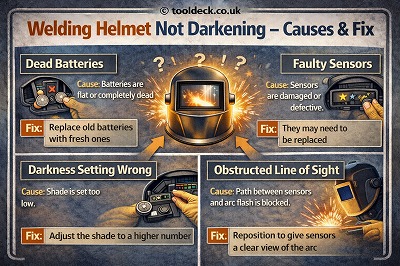
An auto-darkening welding helmet is one of the most important pieces of safety equipment in your workshop. When it fails to darken properly, it’s not just inconvenient — it can seriously damage your eyesight within seconds.
If your welding helmet isn’t reacting to the arc, flickers, or stays light, you need to fix it immediately.
This detailed UK guide will walk you through:
- Exactly why your welding helmet is not darkening
- Step-by-step troubleshooting methods
- How to fix each issue properly
- When it’s time to replace your helmet
⚠️ Why a Non-Darkening Helmet Is Dangerous
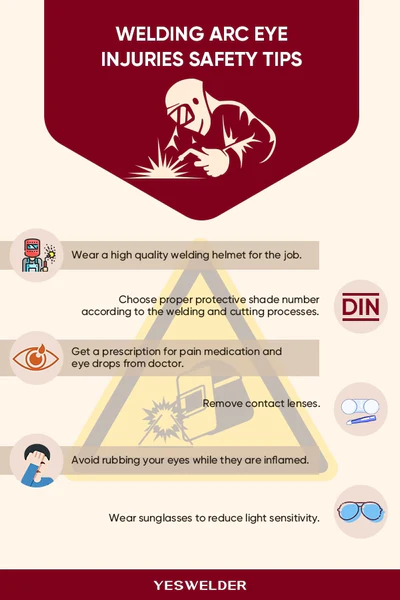
When your helmet fails, your eyes are exposed to:
- Ultraviolet (UV) radiation
- Infrared (IR) radiation
- Intense visible light
🔥 Immediate risks:
- Arc eye (welder’s flash)
- Severe eye irritation (feels like sand in eyes)
- Temporary vision loss
⚠️ Long-term risks:
- Permanent eye damage
- Increased sensitivity to light
👉 Even a split-second exposure can cause injury — never ignore this issue.
🔍 How Auto-Darkening Welding Helmets Work (Detailed)
Auto-darkening helmets rely on a combination of components:
⚙️ 1. Arc Sensors
Detect the sudden increase in brightness when welding starts.
🔋 2. Power Source
- Replaceable batteries
- Solar-assisted cells
🪟 3. LCD Filter Lens
Changes from light to dark shade (e.g. shade 9–13) instantly.
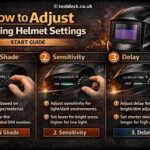
🎛️ 4. Control Settings
- Sensitivity
- Delay
- Shade level
👉 If any one of these components fails, the helmet may not darken.
⚠️ Main Causes & Detailed Fixes
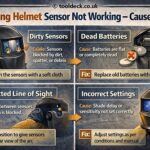
❌ 1. Dead or Weak Battery (Most Common Issue)
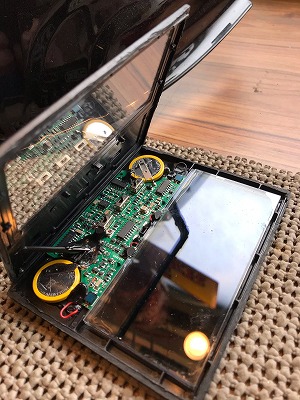
🔍 Why It Happens:
Auto-darkening helmets rely on batteries even if they have solar panels. Over time:
- Batteries lose charge
- Voltage drops below operating level
- Helmet becomes unresponsive
🔧 How to Fix:
- Remove battery cover
- Replace with correct type (often CR2032 or similar)
- Check for corrosion on terminals
- Clean contacts if needed
💡 Pro Tip:
Even solar helmets still need battery backup — don’t rely on light alone.
❌ 2. Dirty or Blocked Sensors
🔍 Why It Happens:
Sensors are usually located on the front of the helmet. They can be blocked by:
- Welding spatter
- Dust or dirt
- Grease or fingerprints
🔧 How to Fix:
- Locate sensors (typically 2–4 small dark circles)
- Clean gently using:
- Microfibre cloth
- Lens cleaner
- Avoid scratching sensor surface
⚠️ Important:
Even partial blockage can stop the helmet from detecting the arc.
❌ 3. Sensitivity Setting Too Low
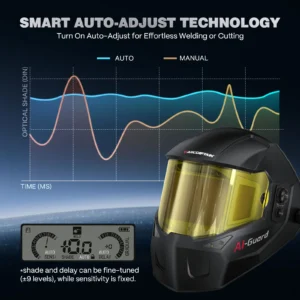
🔍 Why It Happens:
Sensitivity controls how easily the helmet detects light.
- Too low → helmet ignores arc
- Common when doing TIG welding at low amps
🔧 How to Fix:
- Turn sensitivity dial higher
- Test with a short arc
- Adjust until helmet reacts instantly
💡 Pro Tip:
For low-amp TIG welding, always use higher sensitivity.
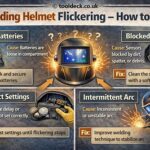
❌ 4. Delay Setting Misconfigured
🔍 Why It Happens:
Delay controls how long the lens stays dark after welding stops.
- Too long → slow response reset
- Too short → flickering effect
🔧 How to Fix:
- Set delay to medium for general use
- Adjust based on preference
👉 This doesn’t usually stop darkening, but affects usability.
❌ 5. Helmet Stuck in Grind Mode
🔍 Why It Happens:
Many helmets include a grind mode, which disables auto-darkening.
🔧 How to Fix:
- Check control panel
- Switch from GRIND → WELD mode
- Test again
👉 This is one of the most overlooked causes.
❌ 6. Faulty Lens Cartridge or Electronics
🔍 Why It Happens:
Internal components can fail due to:
- Age
- Impact damage
- Moisture exposure (common in UK conditions)
🔧 How to Fix:
- Replace lens cartridge (if removable)
- Replace entire helmet if needed
⚠️ Warning:
Do NOT attempt DIY electrical repair — replace instead.
❌ 7. Poor Lighting Conditions
🔍 Why It Happens:
Some helmets struggle in very dark environments.
🔧 How to Fix:
- Improve workshop lighting
- Increase sensitivity
🛠️ Complete Troubleshooting Checklist
Follow this order:
✅ Step 1: Replace battery
✅ Step 2: Clean sensors
✅ Step 3: Check grind mode
✅ Step 4: Adjust sensitivity
✅ Step 5: Test with arc
✅ Step 6: Inspect for damage
👉 This process solves 90% of issues.
⚖️ Repair vs Replace – When to Upgrade
🔧 Repair If:
- Battery issue
- Dirty sensors
- Incorrect settings
🔁 Replace If:
- Helmet doesn’t respond at all
- Flickers constantly
- Lens damaged or cracked
- Helmet is low-quality or old
👉 In the UK market, a reliable helmet is a worthwhile safety investment.
🧠 Pro Tips for UK Welders
- Store helmet in dry place (important for damp UK weather)
- Avoid leaving in cold garages overnight
- Clean lens weekly
- Always test before welding
- Keep spare batteries handy
❌ Common Mistakes to Avoid
❌ Ignoring small delays or flickers
✔ Early signs of failure
❌ Welding without testing helmet
✔ Always test first
❌ Using scratched lens
✔ Replace cover lens regularly
❌ Buying ultra-cheap helmets
✔ Low-quality sensors fail faster
🛡️ Safety Standards in the UK
Look for helmets that meet:
- EN379 (auto-darkening standard)
- CE certification
👉 Ensures proper protection and reliability.
❓ FAQs
Why is my welding helmet not reacting instantly?
Likely due to low sensitivity or weak battery.
Can I still use it if it flickers?
No — replace or fix immediately.
How often should I replace batteries?
Every 6–12 months (depending on usage).
What shade should I use?
Typically shade 9–13 depending on welding type.
🏁 Final Thoughts
If your welding helmet is not darkening, treat it as a serious safety issue — not just a minor inconvenience.
👉 Always check:
- Battery
- Sensors
- Settings
- Helmet condition
If in doubt, replace the helmet — your eyesight is far more valuable than the cost of new equipment.
Leave a Reply