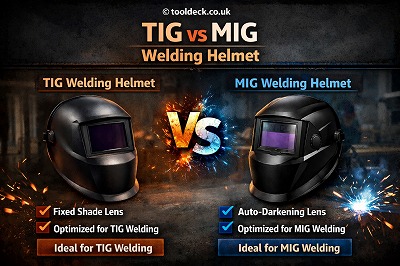
Choosing the right welding helmet is essential for both safety and weld quality. However, many UK welders ask: do you need a different helmet for TIG vs MIG welding?
The short answer: you can use the same helmet — but the requirements are very different.
TIG welding demands high sensitivity and precision, while MIG welding requires strong protection and stability. Using the wrong helmet settings (or the wrong helmet type) can lead to poor visibility, arc instability, or even eye strain.
In this complete UK guide, we’ll break down:
- Key differences between TIG and MIG welding helmets
- Required features for each process
- Recommended settings
- Pros and cons
- How to choose the best helmet for your needs
⚠️ Why Helmet Choice Matters for TIG vs MIG Welding
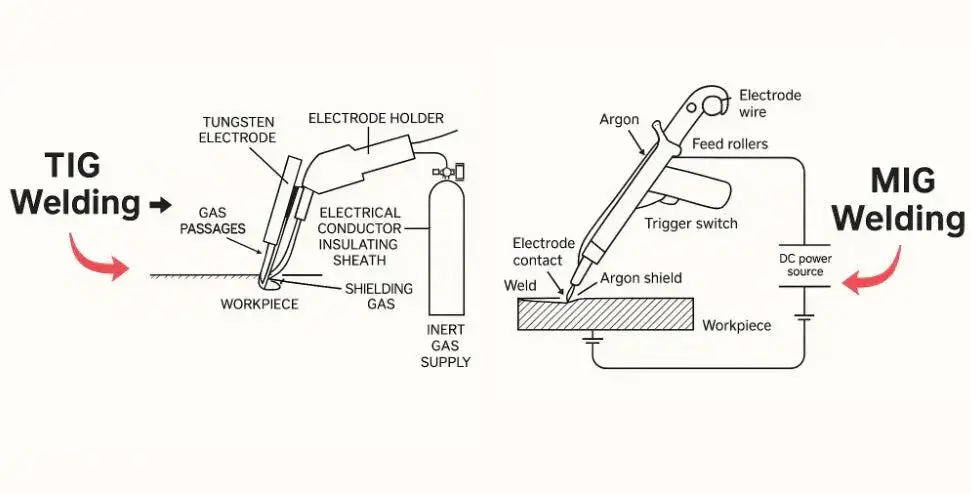
TIG and MIG welding produce very different arcs:
- TIG welding: Low amperage, precise, less bright
- MIG welding: Higher amperage, brighter, more spatter
🔥 This affects:
- Sensor detection
- Shade requirements
- Helmet settings
👉 That’s why understanding the differences is crucial.
🔍 Do You Need Different Helmets for TIG and MIG?
✅ Short Answer:
You can use one good auto-darkening helmet for both, but it must have:
- Adjustable sensitivity
- Wide shade range
- Reliable sensors
👉 Cheap or basic helmets may struggle with TIG welding.
⚙️ Key Differences: TIG vs MIG Helmet Requirements
🔹 1. Arc Detection Sensitivity
TIG Welding:
- Low light intensity
- Requires high sensitivity
MIG Welding:
- Bright arc
- Works with medium sensitivity
👉 TIG is more demanding for helmet performance.
🔹 2. Shade Level Requirements
Recommended Shade:
| Process | Amperage | Shade |
|---|---|---|
| TIG | 10–100A | 9–11 |
| TIG | 100–200A | 11–12 |
| MIG | 100–200A | 10–12 |
| MIG | 200A+ | 12–13 |
👉 MIG generally requires slightly darker settings.
🔹 3. Sensor Quality
TIG Welding:
- Needs high-quality sensors
- Prefer 4 sensors
MIG Welding:
- Works fine with 2 sensors
- Less sensitive requirement
👉 More sensors = better detection in TIG.
🔹 4. Reaction Time
TIG:
- Needs fast and precise response
MIG:
- Still important, but less critical
👉 Faster helmets improve comfort and safety.
🔹 5. Visibility & Clarity
TIG:
- Requires excellent optical clarity
- Precision weld pool control
MIG:
- Less demanding visually
👉 TIG benefits from higher optical class (e.g. 1/1/1/1).
⚖️ TIG vs MIG Welding Helmet – Comparison Table
| Feature | TIG Welding | MIG Welding |
|---|---|---|
| Arc Brightness | Low | High |
| Sensitivity | High | Medium |
| Shade | 9–12 | 10–13 |
| Sensor Requirement | High (4 sensors) | Moderate |
| Visibility Needs | Very high | Moderate |
👉 TIG is more demanding overall.
🛠️ Recommended Helmet Settings
🔹 TIG Welding Settings
- Shade: 9–12
- Sensitivity: High
- Delay: Medium
👉 Ensures arc detection at low amperage.
🔹 MIG Welding Settings
- Shade: 10–13
- Sensitivity: Medium
- Delay: Medium
👉 Prevents flickering in bright conditions.
✅ Best Features for TIG Welding Helmets
- High sensitivity adjustment
- 4 arc sensors
- Fast reaction time
- High optical clarity (1/1/1/1)
- Wide shade range
👉 Essential for precision welding.
✅ Best Features for MIG Welding Helmets
- Stable performance
- Good shade control
- Durable outer lens
- Comfortable design
👉 Focus on durability and ease of use.
⚠️ Common Problems When Using the Wrong Helmet
❌ Using Low-End Helmet for TIG
- Helmet doesn’t detect arc
- Flickering or delayed darkening
❌ Incorrect Sensitivity Settings
- Too low → no detection
- Too high → flickering
❌ Wrong Shade
- Too dark → can’t see weld pool
- Too light → unsafe
🧠 Pro Tips for Welders
- Use one high-quality helmet for both processes
- Always adjust settings before switching welding type
- Keep sensors clean
- Replace batteries regularly
- Test helmet before welding
❌ Common Mistakes to Avoid
❌ Using same settings for TIG and MIG
✔ Always adjust
❌ Ignoring sensitivity settings
✔ Critical for TIG
❌ Choosing cheapest helmet
✔ Quality matters
🛡️ UK Safety Standards Reminder
Ensure your helmet meets:
- EN379 (auto-darkening standard)
- CE marking
👉 Guarantees reliable protection.
❓ FAQs
Can one helmet handle TIG and MIG?
Yes — if it has adjustable settings and good sensors.
Why is TIG harder for helmets?
Because of low arc brightness.
What shade is best for MIG welding?
Usually 10–13 depending on amperage.
Do beginners need different helmets?
No — just a versatile one.
🏁 Final Thoughts
Choosing the right setup for a TIG vs MIG welding helmet is essential for achieving both safety and performance. A high-quality helmet with adjustable sensitivity, proper shade control, and reliable sensors will handle both processes effectively when correctly configured.


Leave a Reply