If you’re looking for the best plasma cutter UK, you’re in the right place. Plasma cutting has become one of the most efficient and precise ways to cut metal, whether you’re a DIY enthusiast, automotive repair specialist, or professional fabricator.
Modern plasma cutters are more compact, powerful, and affordable than ever before. With features like IGBT inverter technology, pilot arc ignition, and digital displays, even entry-level machines now deliver impressive performance.
In this guide, we’ll cover the best plasma cutter UK options available today, along with detailed plasma cutter reviews to help you choose the right machine for your needs.
Best Plasma Cutter UK 2026 – Top 10 Reviews
| Model | Amps | Clean Cut | Max Cut | Pilot Arc | Voltage | Weight |
|---|---|---|---|---|---|---|
| 55A | 10mm | 14mm | ❌ | 230V | 8kg | |
| 60A | 12mm | 16mm | ❌ | 240V | 6.5kg | |
| 60A | 16mm | 20mm | ✅ | 120/240V | ~6kg | |
| 40A | 12mm | 25mm | ✅ | 230V | - | |
| 50A | 10mm | 16mm | ❌ | 240V | 3.8kg | |
| 55A | 10mm | 18mm | ✅ | 240V | 6.8kg | |
| 40A | 12mm | 12mm | ✅ | 230V | - | |
| 50A | 12mm | 20mm | ✅ | 110/220V | - | |
| 40A | 6mm | 12mm | ✅ | 230V | 14kg | |
| 50A | 12mm | 16mm | ❌ | 230V | 14kg |
 SUSEMSE 55A
 Reboot RBC6000
 Reboot RBC6000DLPRO
 Reboot RBC4000LF
 SPRIGHOLLY CUT50
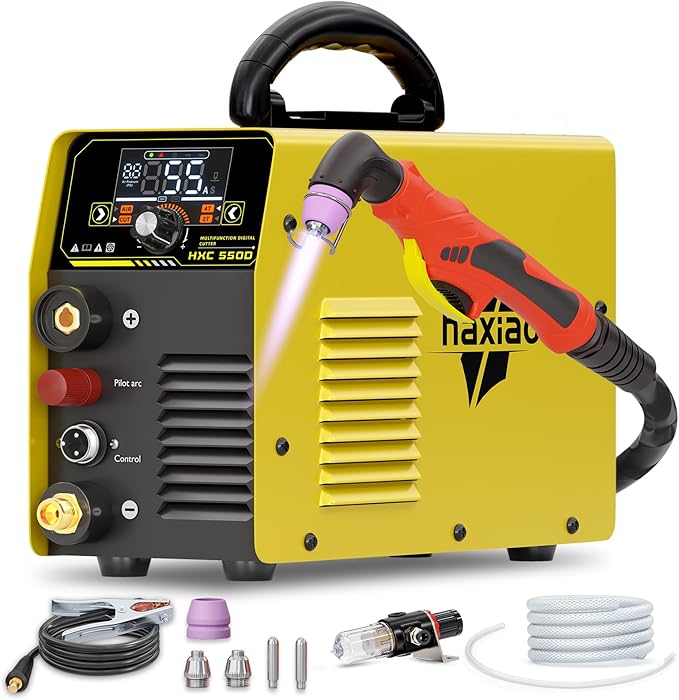
 HAXIAOER HXC550D
 Draper 70066
 Bestarc BTC500DP
 STATIC CUT40
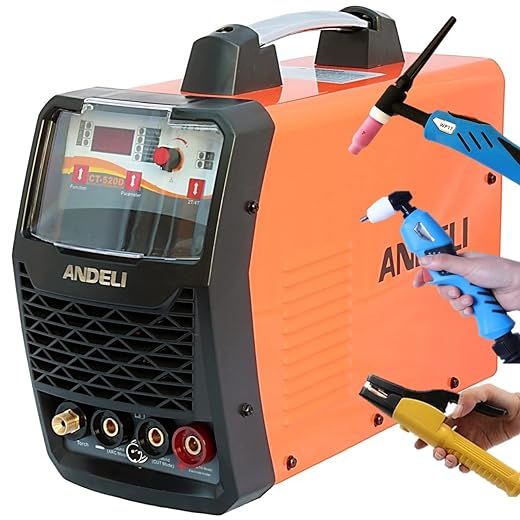
 ANDELI CT-520D
Below are the best models currently available in the UK market, carefully selected based on performance, reliability, and value.
1. SUSEMSE 55A IGBT Plasma Cutter – Best Budget Plasma Cutter UK


The SUSEMSE 55A plasma cutter is an excellent entry-level machine that offers solid performance at an affordable price, making it ideal for DIY users and small workshops.
This unit runs on a 230V single-phase power supply and delivers an adjustable current range of 20–55A. It provides a clean cut up to 10mm and a maximum cutting thickness of 14mm, which is impressive for its price range. Thanks to its IGBT inverter technology, the cutter ensures stable arc performance and improved efficiency (up to 85%).
One standout feature is the digital front display, allowing users to easily adjust voltage and current settings. It also includes safety indicators for over-current and air pressure, helping prevent damage during operation.
Cooling is handled by an efficient fan system with a well-designed ventilation layout, ensuring consistent performance without overheating. Despite its compact size and 8kg weight, it feels robust and suitable for regular use.
This plasma cutter works well on various materials, including stainless steel, mild steel, aluminium, and copper. It’s particularly suited for DIY projects, home garages, and light fabrication work.
Pros:
- Affordable price point
- Stable IGBT inverter performance
- Digital display for easy control
- Good cutting capacity for beginners
- Lightweight and portable
Cons:
- No pilot arc (requires contact start)
- Not ideal for heavy industrial use
2. Reboot RBC6000 60A Plasma Cutter – Best Value for Power

The Reboot RBC6000 delivers excellent cutting power and versatility, making it one of the best value options in this list.
Powered by advanced IGBT inverter technology, this 60A plasma cutter can achieve a clean cut of up to 12mm and a maximum cut of 16mm. It uses touch arc ignition, which requires contact with the metal surface but ensures reliable arc starting.
One of its most user-friendly features is the quick 1-minute setup. With an integrated air filter and built-in controller, you can get started almost instantly without complicated installation.
The upgraded PT31 torch with a roller guide significantly improves cutting precision and reduces fatigue, especially during long cutting sessions.
Weighing just 6.5kg, it’s highly portable, making it ideal for both workshop and site use. It handles a wide range of metals, including stainless steel, aluminium, and copper.
Pros:
- Strong 60A output
- Clean cuts up to 12mm
- Lightweight and portable
- Easy setup with built-in air filter
- Smooth cutting with roller guide
Cons:
- Touch arc only (no pilot arc)
- Duty cycle limited at higher output
3. Reboot RBC6000DLPRO 60A Pilot Arc Plasma Cutter – Best Dual Voltage Plasma Cutter UK

The Reboot RBC6000DLPRO stands out for its dual voltage capability (120V/240V) and non-touch pilot arc technology.
This machine can deliver clean cuts up to 5/8 inch (~16mm), with a maximum severance cut approaching 20mm. The pilot arc function allows cutting through painted, rusty, or dirty surfaces without direct contact, making it ideal for automotive and industrial applications.
The upgraded digital display provides precise control over amperage and real-time monitoring, giving users better accuracy and efficiency.
Its compact design (14.3 x 4.6 x 8.6 inches) makes it easy to transport and store, while still delivering professional-grade performance.
Pros:
- Dual voltage flexibility
- Non-touch pilot arc
- Excellent cutting performance
- Digital control panel
- Compact and portable
Cons:
- Slightly higher price
- Requires good air compressor
4. Reboot RBC4000LF 40A Plasma Cutter – Best for Rusty Metal

The Reboot RBC4000LF is specifically designed for cutting through challenging surfaces like rust, paint, and grease.
Its non-contact arc ignition allows cutting without touching the metal, preventing surface damage and improving safety. With a maximum cut thickness of 25mm and a clean cut of 12mm, it delivers impressive results for a 40A machine.
A unique feature is its UK home circuit compatibility, with anti-tripping protection that prevents blowing fuses—perfect for home garages.
The digital display shows air pressure, voltage, and error codes, ensuring full control during operation. The 2T/4T modes also help reduce hand fatigue.
Pros:
- Cuts rusty and painted metal easily
- UK circuit-friendly design
- Digital monitoring system
- Non-contact pilot arc
- High max cutting capacity
Cons:
- Lower duty cycle
- Requires external compressor
5. SPRIGHOLLY CUT50 50A Plasma Cutter – Best Lightweight Plasma Cutter UK

The SPRIGHOLLY CUT50 plasma cutter is an excellent choice for users who prioritise portability.
Weighing just 3.8kg, this is one of the lightest machines available. Despite its size, it delivers a clean cut of 10mm and a maximum cut of 16mm, powered by efficient IGBT inverter technology.
Setup is incredibly simple, thanks to its built-in regulator and plug-and-play design. This makes it perfect for beginners or those working on-site.
It supports a wide range of metals, including aluminium, brass, stainless steel, and titanium, making it versatile for multiple applications.
Pros:
- Extremely lightweight
- Easy setup
- Good cutting performance
- Wide material compatibility
Cons:
- Basic features
- No pilot arc
6. HAXIAOER HXC550D Plasma Cutter – Best Smart Display & Pilot Arc Technology

The HAXIAOER HXC550D 55A Plasma Cutter is a highly advanced machine that combines modern digital control, non-touch pilot arc technology, and intelligent airflow management, making it one of the most feature-rich options in its class.
At the core of this machine is its non-touch pilot arc system, which allows you to start cutting without direct contact with the metal surface. This is particularly useful when working with rusty, painted, or dirty materials, as it eliminates the need for pre-cleaning and prevents damage to the torch tip. For professionals working in automotive repair or site environments, this feature alone significantly improves efficiency.
The cutting performance is impressive, with a maximum cutting thickness of 18mm and an optimal clean cut around 10mm. Powered by upgraded low-frequency MCU and IGBT inverter technology, the machine maintains stable current output (up to 55A) without fluctuation, ensuring smooth and consistent cuts.
One of its standout features is the large LED display interface, which clearly shows voltage, current, and system parameters in real time. This allows welders to adjust settings quickly without removing their helmet, improving workflow efficiency.
The air sensor detection system is another premium feature. It monitors airflow and ensures optimal gas pressure before cutting begins. Combined with adjustable post-flow settings (2–15 seconds), this helps extend consumable life and maintain torch performance.
Additionally, the 2T/4T trigger modes reduce hand fatigue, making it ideal for long cutting sessions in workshops or industrial environments.
Pros:
- Non-touch pilot arc for cutting dirty metals
- Large LED display for real-time monitoring
- Air sensor technology improves efficiency
- High max cut capacity (18mm)
- 2T/4T modes for reduced fatigue
Cons:
- Slightly more complex for beginners
- Mid-range price point
7. Draper 70066 Plasma Cutter – Best Trusted UK Brand Reliability

The Draper 70066 40A Plasma Cutter is an excellent choice for users who value brand reliability, build quality, and consistent performance. Draper is a well-established UK brand, known for producing durable tools suitable for both DIY and professional environments.
This plasma cutter features IGBT inverter technology, which improves efficiency and ensures stable output while reducing energy consumption. It also includes thermal overload protection, preventing overheating and extending the lifespan of the machine.
The machine uses a high-frequency pilot arc system, allowing for fast arc starting and smoother cuts. With a maximum cutting thickness of 12mm, it is ideal for general fabrication, maintenance work, and home workshops.
The included AG60 plasma torch (4m cable) provides good reach and flexibility, while the overall design is robust and built to withstand regular use.
Although it does not include advanced features like digital displays or air sensors, it excels in simplicity, reliability, and ease of use.
Pros:
- Trusted UK brand with strong reputation
- Reliable and durable construction
- Thermal overload protection
- Smooth cutting with HF pilot arc
Cons:
- Limited advanced features
- Lower cutting capacity compared to newer models
8. Bestarc BTC500DP Plasma Cutter – Best Advanced Feature-Rich Machine
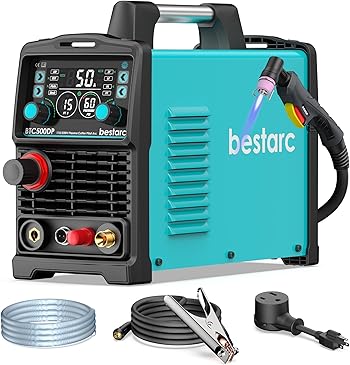
The Bestarc BTC500DP Plasma Cutter is one of the most technologically advanced machines on this list, making it ideal for professionals who require precision, flexibility, and efficiency.
This model supports dual voltage (110V/220V), allowing it to be used in both home and industrial environments. It delivers a clean cut of up to 12mm and a maximum cut of up to 20mm, making it suitable for heavy-duty applications.
The pilot arc function is a major advantage, enabling non-contact cutting on rusted, painted, or uneven surfaces. This improves cutting efficiency and reduces wear on consumables.
One of the standout features is the air sensor technology, which displays air pressure directly on the front panel. This ensures optimal airflow, which is critical for maintaining cut quality.
The LED screen display provides real-time feedback on voltage, current, and error codes, making troubleshooting and adjustments quick and easy.
Additionally, the machine includes advanced features such as:
- 2T/4T trigger modes
- Adjustable post-flow time (3–15s)
- Pilot arc timing adjustment
These features allow for a highly customised cutting experience.
Pros:
- Dual voltage flexibility
- High max cutting capacity (20mm)
- Advanced air sensor and LED display
- Pilot arc for dirty materials
- Fully adjustable settings
Cons:
- More complex for beginners
- Higher price range
9. STATIC CUT40 Plasma Cutter with Built-In Compressor – Best All-in-One Solution

The STATIC CUT40 Plasma Cutter with Built-In Air Compressor is a unique all-in-one solution designed for users who want maximum convenience and portability.
Unlike most plasma cutters, this model includes an integrated air compressor, eliminating the need for external equipment. This makes it ideal for on-site work, mobile technicians, and beginners who want a simple plug-and-play setup.
The built-in compressor can handle cuts up to 6mm, while connecting an external compressor allows cutting up to 12mm. This flexibility makes it suitable for both light-duty and moderate tasks.
The machine features a non-contact pilot arc, ensuring smooth cutting even on uneven or coated surfaces. It also includes adjustable air pre-flow and post-flow settings, which help improve cut quality and extend consumable life.
With a 60% duty cycle at 40A, it can handle continuous work without overheating. However, at 14kg, it is heavier than most portable units.
Pros:
- Built-in compressor for convenience
- No external setup required
- Pilot arc for smooth cutting
- Good for mobile use
Cons:
- Limited cutting depth without external air
- Heavier than other models
10. ANDELI CT-520D Multiprocess Plasma Cutter – Best Multi-Function Workshop Machine
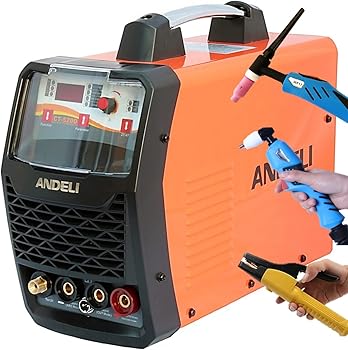
The ANDELI CT-520D Multiprocess Machine is a versatile 3-in-1 solution, combining:
- Plasma cutting
- TIG welding
- MMA (stick) welding
This makes it an excellent choice for users who want a complete workshop setup in one machine.
The plasma cutter function delivers 50A output, allowing for a clean cut up to 12mm and a maximum cut of 16mm. Meanwhile, the TIG and MMA modes provide up to 200A welding power, suitable for a wide range of materials.
The machine uses IGBT inverter technology, ensuring stable performance and energy efficiency. It also includes features such as:
- 2T/4T modes
- Adjustable slope control for TIG welding
- Anti-stick and arc force functions
Despite being a multi-process unit, it remains relatively compact and portable.
Pros:
- 3-in-1 functionality (cut + weld)
- High versatility
- Suitable for workshops
- Good power output
Cons:
- Not specialised for plasma cutting only
- Heavier and more complex
If you’re a beginner, go for a lightweight 40–50A machine with simple controls. For professionals, choose a 60A+ plasma cutter with pilot arc and dual voltage for maximum flexibility.
What is a Plasma Cutter?
A plasma cutter is a tool that uses an electrically conductive gas to cut through metal.
Advantages:
- Fast and precise cutting
- Works on multiple metals
- Cleaner than traditional methods
Disadvantages:
- Requires air compressor
- Not ideal for very thick metals
- Needs proper safety gear
How to Choose the Best Plasma Cutter

Choosing the best plasma cutter UK isn’t just about picking the highest amperage or the cheapest model—it’s about matching the machine to your specific needs, materials, and working environment. Below is a detailed breakdown of the most important factors you should consider before buying.
1. Power Output (Amperage)
The amperage (A) directly determines how thick a metal you can cut.
- 30–40A → Suitable for thin metal (up to ~10mm)
- 40–50A → Ideal for general DIY and garage work (10–16mm)
- 50–60A+ → Best for professional and heavy-duty use (16–25mm+)
👉 Tip: Always choose a machine with slightly higher amperage than you need. Running a cutter at maximum capacity constantly will reduce its lifespan.
2. Clean Cut vs Maximum Cut Thickness
Manufacturers often list two cutting capacities:
- Clean Cut Thickness → Smooth, precise cut with minimal finishing required
- Maximum (Severance) Cut → Rough cut, often requiring grinding
👉 Best practice: Focus on the clean cut rating, as this reflects real-world performance.
3. Pilot Arc vs Contact Arc
This is one of the most important decisions:
✔ Pilot Arc (Non-Touch)
- Starts arc without touching the metal
- Cuts through rust, paint, dirt, and mesh
- More efficient and reduces consumable wear
- Ideal for professionals
✔ Contact Arc (Touch Start)
- Requires direct contact with metal
- More affordable
- Suitable for clean surfaces and beginners
👉 Recommendation: If your budget allows, always choose a pilot arc plasma cutter for better versatility.
4. Input Voltage (230V vs Dual Voltage)
- 230V (UK Standard): Perfect for home and workshop use
- Dual Voltage (110V/230V): Offers flexibility for different locations and job sites
👉 If you plan to work on-site or in multiple environments, dual voltage is a major advantage.
5. Duty Cycle
The duty cycle tells you how long the machine can operate continuously.
- Example: 60% duty cycle at 40A
→ 6 minutes cutting, 4 minutes cooling - Higher duty cycle = better for continuous work
👉 For occasional DIY, 30–40% is fine.
👉 For professional use, aim for 60% or higher.
6. Air Compressor Requirements
Most plasma cutters require an external air compressor:
- Typical requirement: 40–70 PSI
- Airflow must be consistent for clean cuts
Some models include:
- Built-in compressor → convenient but limited performance
- Air regulator/filter → improves cut quality
👉 Always ensure your compressor meets the machine’s requirements.
7. Cutting Technology (IGBT Inverter)
Modern plasma cutters use IGBT inverter technology, which offers:
- Better energy efficiency
- Stable arc performance
- Lightweight design
- Reduced heat generation
👉 Avoid outdated transformer-based machines—IGBT is the standard in the UK market.
8. Portability & Build Quality
Depending on your usage:
- Under 6kg → Highly portable (ideal for mobile work)
- 6–10kg → Balanced portability and power
- 10kg+ → Better for workshop setups
Also consider:
- Carry handles or straps
- Durable casing
- Cooling system (fan + ventilation)
9. Control Panel & Ease of Use
A good plasma cutter should be easy to operate, especially for beginners.
Look for:
- Digital display (LED/LCD)
- Clear amperage and voltage settings
- Error codes for troubleshooting
- Simple control knobs
👉 Advanced users may benefit from more precise digital controls.
10. Additional Features That Matter
Modern plasma cutters come with useful features that improve performance:
- 2T/4T Trigger Modes
- 2T → manual control
- 4T → continuous cutting (less fatigue)
- Post-Flow Control
- Cools torch after cutting
- Extends consumable life
- Air Sensor Technology
- Monitors airflow in real time
- Thermal Protection
- Prevents overheating
👉 These features are especially valuable for frequent or professional use.
11. Material Compatibility
Make sure the plasma cutter can handle the materials you plan to cut:
- Mild steel
- Stainless steel
- Aluminium
- Copper
- Brass
👉 Higher-end machines handle a wider range of materials more efficiently.
12. Budget vs Performance
- £100–£200 → Basic DIY models
- £200–£400 → Mid-range (best value)
- £400+ → Professional-grade
👉 Don’t just go for the cheapest option—invest in reliability and safety.
To choose the best plasma cutter UK, ask yourself:
- What thickness of metal will I cut most often?
- Do I need portability or workshop power?
- Will I cut clean or dirty/rusted materials?
- Do I need advanced features or simple operation?
👉 For beginners: Choose a 40–50A machine with simple controls
👉 For professionals: Go for 60A+, pilot arc, and digital features
Types of Plasma Cutter
Understanding the different types of plasma cutter is essential when choosing the right machine for your needs. Each type is designed for specific applications, environments, and skill levels. Below is a detailed breakdown of the most common plasma cutter types available in the UK market, along with their advantages, limitations, and best use cases.
1. Air Plasma Cutters (Standard Plasma Cutters)
Air plasma cutters are the most common type used in the UK. They use compressed air as the plasma gas to cut through conductive metals.
How it works:
Compressed air is forced through a nozzle and ionised into plasma, creating a high-temperature jet that melts and cuts metal.
Advantages:
- Affordable and widely available
- Easy to use for beginners
- Suitable for most metals (steel, aluminium, copper, etc.)
- Low running costs (air is cheap and accessible)
Disadvantages:
- Requires an external air compressor
- Slightly less precise than industrial systems
Best for:
- DIY users
- Home workshops
- General metal cutting tasks
👉 Summary: The best all-round choice for most users looking for the best plasma cutter UK.
2. Pilot Arc Plasma Cutters (Non-Contact Plasma Cutters)
Pilot arc plasma cutters are a more advanced type that allows cutting without touching the metal surface.
How it works:
A pilot arc is generated between the electrode and nozzle before transferring to the metal, allowing ignition without direct contact.
Advantages:
- Cuts through rust, paint, grease, and dirt
- No need to clean the surface before cutting
- Reduces wear on consumables
- More stable and efficient cutting
Disadvantages:
- Higher cost than standard models
- Slightly more complex
Best for:
- Automotive repair
- Outdoor/site work
- Professional fabrication
👉 Summary: Ideal for users who want maximum efficiency and versatility.
3. Contact Arc Plasma Cutters (Touch Start)
These are basic plasma cutters that require the torch to physically touch the metal to start the arc.
How it works:
The arc is initiated only when the nozzle makes contact with the workpiece.
Advantages:
- Lower cost
- Simple design
- Easy for beginners to understand
Disadvantages:
- Cannot cut dirty or coated metal easily
- Higher wear on torch consumables
- Less efficient than pilot arc systems
Best for:
- Beginners
- Clean metal cutting
- Budget-conscious users
👉 Summary: A good entry-level option, but less versatile than pilot arc models.
4. Built-in Compressor Plasma Cutters
These machines come with an integrated air compressor, eliminating the need for external equipment.
How it works:
The internal compressor supplies air directly to the plasma torch.
Advantages:
- Fully portable and self-contained
- No need for external compressor
- Quick setup (plug-and-play)
Disadvantages:
- Limited cutting power (usually thinner materials)
- Heavier due to built-in components
- Less airflow compared to external compressors
Best for:
- Mobile technicians
- On-site repairs
- Occasional DIY use
👉 Summary: Perfect for convenience and portability, but not for heavy-duty cutting.
5. Dual Voltage Plasma Cutters
These machines can operate on both 110V and 230V power supplies, offering greater flexibility.
How it works:
Automatically or manually switches between different voltage inputs.
Advantages:
- Works in multiple environments
- Ideal for job sites and workshops
- Better power control
Disadvantages:
- Slightly more expensive
- May require adapter plugs
Best for:
- Professionals
- Users working in different locations
👉 Summary: A flexible option for users who need portability and adaptability.
6. Multi-Process Plasma Cutters
These are combination machines that include:
- Plasma cutting
- TIG welding
- MMA (stick) welding
How it works:
A single unit performs multiple functions depending on the selected mode.
Advantages:
- Highly versatile
- Saves space and cost
- Ideal for workshops
Disadvantages:
- Not specialised for one task
- More complex to operate
- Heavier than single-purpose machines
Best for:
- Small workshops
- DIY users needing multiple functions
- Budget-conscious professionals
👉 Summary: Great value for multi-purpose use, but not as powerful as dedicated machines.
7. CNC Plasma Cutters
CNC (Computer Numerical Control) plasma cutters are industrial machines used for automated cutting.
How it works:
The plasma torch is controlled by a computer, following programmed cutting paths.
Advantages:
- Extremely precise and repeatable
- Ideal for complex designs
- High production efficiency
Disadvantages:
- Very expensive
- Requires technical knowledge
- Not suitable for beginners
Best for:
- Industrial manufacturing
- Metal fabrication businesses
- High-volume production
👉 Summary: Best for professionals needing precision and automation.
8. High-Frequency vs Low-Frequency Plasma Cutters
High-Frequency (HF) Plasma Cutters:
- Faster arc ignition
- Smoother cutting performance
- May interfere with electronics
Low-Frequency Plasma Cutters:
- More stable and safer for sensitive environments
- Better for modern workshops
👉 Summary: HF is more traditional; low-frequency is safer and more modern.
When choosing between different types of plasma cutter, your decision should depend on:
- Your experience level (beginner vs professional)
- Type of materials (clean vs rusty/painted)
- Work environment (home, workshop, or site)
- Budget and required features
👉 For most users:
- Best overall: Air plasma cutter with pilot arc
- Best for beginners: Contact arc plasma cutter
- Best for professionals: Pilot arc with digital features
- Best for portability: Built-in compressor models
Plasma Cutter UK Brands
Reboot
A leading brand known for innovative features, pilot arc technology, and reliability. Ideal for both DIY and professional users.
Draper
A trusted UK brand offering durable and reliable tools. Best for users who prioritise build quality and brand reputation.
Bestarc
Focused on advanced features and high performance, often including dual voltage and smart controls.
HAXIAOER
Emerging brand with modern digital features, including LED displays and air sensor technology.
SUSEMSE
Budget-friendly brand offering solid entry-level performance for beginners and hobbyists.
FAQs – Plasma Cutter
1. What thickness can a plasma cutter cut?
Most home units cut 10–12mm cleanly, while higher-end models reach 20mm+.
2. Do I need an air compressor?
Yes, unless the unit has a built-in compressor.
3. Is pilot arc worth it?
Yes, especially for cutting dirty or painted metal.
4. Can beginners use plasma cutters?
Absolutely. Many models are beginner-friendly.
5. What power supply do I need in the UK?
Most run on 230V single-phase power.
Conclusion
Choosing the best plasma cutter UK depends on your needs, budget, and experience level. Whether you need a portable DIY machine or a professional-grade cutter, there are excellent options available today.
If you want the best all-rounder, go for a 60A pilot arc model. For beginners, a lightweight 40–50A unit is more than enough.
Leave a Reply