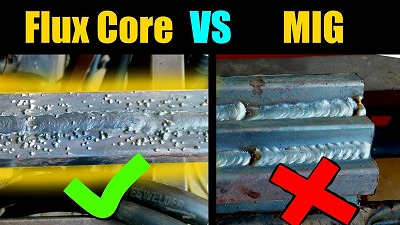
If you’re researching welding equipment, you’ve likely come across the comparison: MIG welder vs flux core – are they the same or different?
The confusion is understandable because flux core welding is technically a type of MIG welding. However, in practice, they are used differently and produce very different results.
In this complete UK-focused guide, you’ll learn the key differences between MIG (gas) welding and flux core welding, including performance, cost, and which one is best for your projects.
Contents
- What is a MIG Welder?
- What is Flux Core Welding?
- MIG Welder vs Flux Core: Key Differences
- Pros and Cons
- When Should You Use a MIG Welder?
- When Should You Use Flux Core Welding?
- MIG vs Flux Core for Beginners
- MIG vs Flux Core for Car Bodywork
- MIG vs Flux Core for Thick Steel
- Final Verdict: MIG Welder vs Flux Core
What is a MIG Welder?
A MIG welder (gas MIG) uses:
- A solid wire electrode
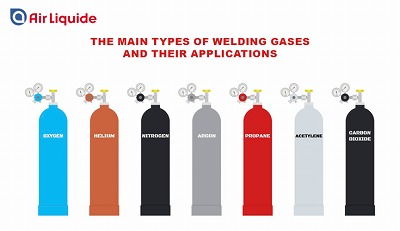
- External shielding gas (usually Argon/CO₂ mix)
Key Features:
- Clean welds
- Low spatter
- Easy to use
- Best for indoor work
👉 This is the standard MIG welding setup used in most UK workshops.
What is Flux Core Welding?
Flux core welding uses a flux-cored wire that produces its own shielding gas when heated.
Key Features:
- No external gas required
- Produces slag
- Works well outdoors
- Deeper penetration
👉 Often referred to as gasless MIG welding.
MIG Welder vs Flux Core: Key Differences
1. Shielding Method
- MIG Welding: Uses external gas
- Flux Core: Uses flux inside the wire
👉 Main difference: Gas vs no gas
2. Weld Quality
- MIG: Clean, smooth welds
- Flux Core: Rougher welds with slag
👉 Winner: MIG welding
3. Ease of Use
- MIG: Easier for beginners
- Flux Core: Slightly harder to control
👉 Winner: MIG
4. Outdoor Performance
- MIG: Not suitable in wind (gas blows away)
- Flux Core: Excellent for outdoor welding
👉 Winner: Flux Core
5. Penetration Power
- MIG: Moderate penetration
- Flux Core: Deeper penetration
👉 Winner: Flux Core
6. Spatter and Cleanup
- MIG: Minimal spatter
- Flux Core: More spatter + slag removal
👉 Winner: MIG
7. Cost
- MIG: Higher upfront cost (gas + regulator)
- Flux Core: Lower startup cost
👉 Winner: Flux Core
8. Portability
- MIG: Less portable (gas cylinder needed)
- Flux Core: Highly portable
👉 Winner: Flux Core
Pros and Cons
MIG Welding (Gas) Pros
- Clean, professional finish
- Less spatter
- Easier for beginners
- Better for thin metal
MIG Welding Cons
- Requires shielding gas
- Not suitable outdoors
- Higher setup cost
Flux Core Welding Pros
- No gas required
- Works in windy conditions
- Strong weld penetration
- Lower initial cost
Flux Core Welding Cons
- More spatter and smoke
- Slag requires cleaning
- Rougher weld appearance
- Harder to master
When Should You Use a MIG Welder?
Choose MIG (gas) if you:
- Work indoors
- Want clean, neat welds
- Are a beginner
- Weld thin or medium steel
- Do automotive or DIY projects
👉 Perfect for garage work and hobby welding
When Should You Use Flux Core Welding?
Choose flux core if you:
- Work outdoors
- Weld in windy conditions
- Need portability
- Work with thicker steel
- Want a budget setup
👉 Ideal for construction, farm work, and site jobs.
MIG vs Flux Core for Beginners
If you’re new to welding:
👉 MIG (gas) is the better starting point
Why?
- Easier to control
- Cleaner results
- Faster learning curve
However:
👉 Choose flux core if you mainly weld outdoors.
MIG vs Flux Core for Car Bodywork
- MIG: Best option (clean, controlled heat)
- Flux Core: Not recommended (too much spatter)
👉 Winner: MIG welding
MIG vs Flux Core for Thick Steel
- MIG: Good performance
- Flux Core: Better penetration
👉 Winner: Flux Core
Final Verdict: MIG Welder vs Flux Core
Both welding methods are useful, but they serve different purposes:
- Choose MIG welding for clean, indoor, precision work
- Choose Flux core welding for outdoor, heavy-duty tasks
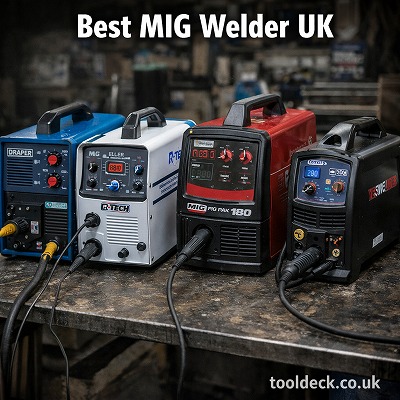
👉 Many welders in the UK use dual-purpose machines that support both.
Final Thoughts
Understanding the difference between MIG welding and flux core welding will help you choose the right setup and improve your results. MIG offers clean, high-quality welds, while flux core provides flexibility and strength in outdoor environments.


Leave a Reply