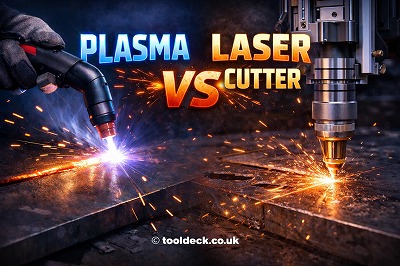
When comparing modern metal cutting technologies, the debate of plasma cutter vs laser cutter is becoming increasingly common in the UK. Both tools are capable of cutting metal with precision, but they use completely different technologies and are suited to very different applications.
So, which one should you choose?
In this complete UK guide, we’ll cover:
- How plasma cutters and laser cutters work
- Key differences in performance
- Pros and cons
- Best use cases
- Which tool is right for your needs
Contents
- ⚠️ Why Choosing the Right Cutting Technology Matters
- 🔍 What Is a Plasma Cutter?
- 🔍 What Is a Laser Cutter?
- ⚙️ Plasma Cutter vs Laser Cutter – Key Differences
- 🔹 1. Cutting Technology (How Each System Works)
- 🔹 2. Precision & Tolerance
- 🔹 3. Cut Quality & Edge Finish
- 🔹 4. Cutting Speed (Based on Thickness)
- 🔹 5. Material Thickness Capability
- 🔹 6. Heat-Affected Zone (HAZ)
- 🔹 7. Versatility & Material Range
- 🔹 8. Equipment Cost & Investment
- 🔹 9. Operating Costs & Maintenance
- 🔹 10. Ease of Use & Learning Curve
- 🔹 11. Application & Industry Use
- Summary of Key Differences
⚠️ Why Choosing the Right Cutting Technology Matters
Choosing the wrong cutting method can lead to:
- Poor cut quality
- Wasted materials
- Higher production costs
- Inefficient workflow
👉 Understanding the difference between a plasma cutter vs laser cutter helps you choose the most efficient tool for your specific needs.
🔍 What Is a Plasma Cutter?
A plasma cutter uses a high-temperature plasma arc to cut through electrically conductive metals.
⚙️ How It Works:
- Gas is ionised into plasma
- Plasma reaches temperatures of up to 25,000°C
- The arc melts metal and removes it
🔩 Materials:
- Steel
- Stainless steel
- Aluminium
- Copper
👉 Ideal for fast, affordable metal cutting.
✅ Advantages of Plasma Cutters
- Fast cutting speed
- Lower cost than laser systems
- Works on various metals
- Easy to use
❌ Disadvantages of Plasma Cutters
- Lower precision than laser
- Rougher edges
- More heat distortion
🔍 What Is a Laser Cutter?
A laser cutter uses a focused beam of light (laser) to cut or engrave materials with extreme precision.
⚙️ How It Works:
- Laser beam is concentrated into a small point
- Generates intense heat
- Melts or vaporises material
🔩 Materials:
- Metals
- Plastics
- Wood (depending on type)
👉 Ideal for high-precision and detailed cutting.
✅ Advantages of Laser Cutters
- Extremely precise cuts
- Smooth, clean edges
- Minimal finishing required
- Suitable for complex designs
❌ Disadvantages of Laser Cutters
- Very high cost
- Complex setup
- Slower on thick metal
- Requires specialised environment
⚙️ Plasma Cutter vs Laser Cutter – Key Differences
🔹 1. Cutting Technology (How Each System Works)
⚡ Plasma Cutter:
- Uses an electrical arc to ionise gas into plasma
- Plasma reaches extremely high temperatures (~25,000°C)
- Melts metal and removes it with high-pressure gas
🔬 Laser Cutter:
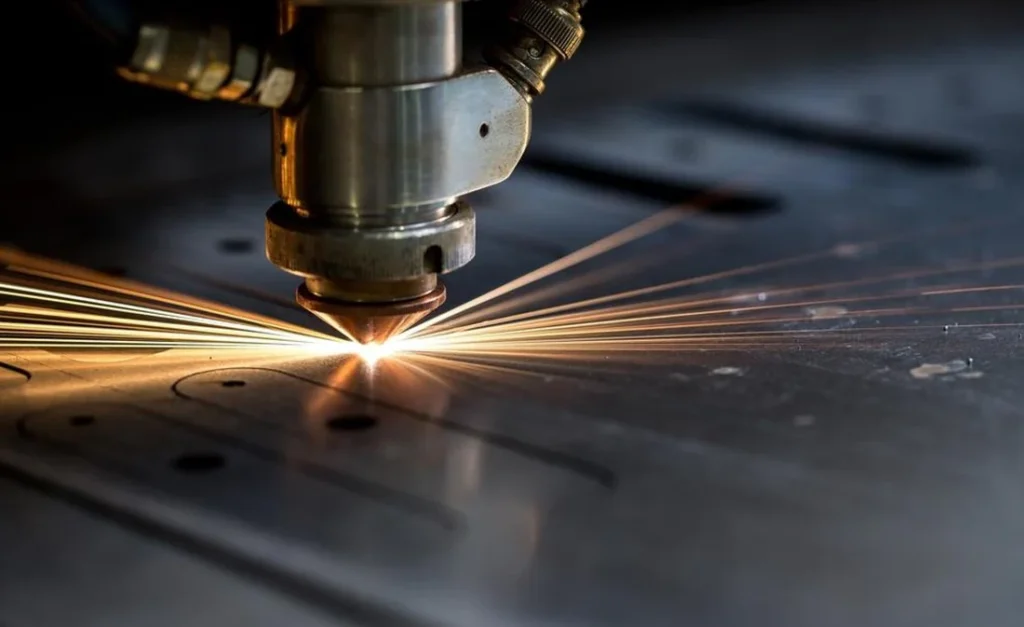
- Uses a focused beam of light (laser)
- Concentrates energy into a tiny focal point
- Melts or vaporises material with extreme precision
👉 Key Difference:
Plasma is a thermal arc process, while laser cutting is a light-based precision process.
🔹 2. Precision & Tolerance
Plasma Cutter:
- Moderate precision
- Wider kerf (cut width)
- Less suitable for fine detail
Laser Cutter:
- Extremely high precision (often within ±0.1 mm)
- Very narrow kerf
- Ideal for intricate designs
👉 Verdict: Laser cutters are vastly superior for precision work and detailed cutting.
🔹 3. Cut Quality & Edge Finish
Plasma Cutter:
- Clean cuts but may leave:
- Slight slag (dross)
- Rougher edges
- Often requires finishing
Laser Cutter:
- Smooth, polished edges
- Minimal or no post-processing
- Excellent consistency
👉 Verdict: Laser cutting delivers near-perfect finishes straight off the machine.
🔹 4. Cutting Speed (Based on Thickness)
Plasma Cutter:
- Very fast on medium to thick metal
- Maintains speed even on heavy materials
Laser Cutter:
- Extremely fast on thin materials
- Slows down significantly on thicker metal
👉 Verdict:
- Thin metal → Laser is faster
- Thick metal → Plasma is faster
🔹 5. Material Thickness Capability
Plasma Cutter:
- Handles thick metals efficiently
- Ideal for heavy-duty cutting
Laser Cutter:
- Best for thin to medium thickness
- Limited performance on thick metal (unless industrial-grade)
👉 Verdict: Plasma cutter is better for thick metal cutting.
🔹 6. Heat-Affected Zone (HAZ)
Plasma Cutter:
- Larger heat-affected zone
- More risk of warping or distortion
Laser Cutter:
- Very small heat-affected zone
- Minimal distortion
👉 Verdict: Laser cutting is better for delicate or precision components.
🔹 7. Versatility & Material Range
Plasma Cutter:
- Works only on electrically conductive metals
Laser Cutter:
- Works on:
- Metals
- Plastics
- Wood
- Acrylic (depending on machine)
👉 Verdict: Laser cutters are more versatile across different materials.
🔹 8. Equipment Cost & Investment
Plasma Cutter:
- Affordable for most UK users
- Entry-level machines widely available
- Low setup cost
Laser Cutter:
- Very high upfront investment
- Industrial systems can cost thousands
- Requires specialised setup
👉 Verdict: Plasma cutter is far more accessible for DIY and small workshops.
🔹 9. Operating Costs & Maintenance
Plasma Cutter:
- Consumables:
- Electrodes
- Tips
- Relatively low maintenance
Laser Cutter:
- Higher maintenance costs
- Requires:
- Optics cleaning
- Cooling systems
- Specialist servicing
👉 Verdict: Plasma cutters are cheaper and easier to maintain.
🔹 10. Ease of Use & Learning Curve
Plasma Cutter:
- Beginner-friendly
- Simple setup
- Quick to learn
Laser Cutter:
- Requires training
- Complex software and calibration
- Often CNC-controlled
👉 Verdict: Plasma cutter is much easier for beginners.
🔹 11. Application & Industry Use
Plasma Cutter:
- Fabrication workshops
- Automotive repair
- Construction
Laser Cutter:
- Manufacturing
- Engineering
- Precision parts production
👉 Verdict: Plasma is practical; laser is industrial and precision-focused.
Summary of Key Differences
| Category | Plasma Cutter | Laser Cutter |
|---|---|---|
| Technology | Plasma arc | Laser beam |
| Precision | Medium | Very high |
| Cut Quality | Good | Nomal |
| Speed | Fast (thick metal) | Fast (thin metal) |
| Thickness | Thick metal | Thin–medium |
| Cost | Affordable | Very expensive |
| Ease of Use | Easy | Complex |
👉 In simple terms:
- Plasma cutter = power, affordability, thick metal cutting
- Laser cutter = precision, quality, high-end production
🛠️ When Should You Use a Plasma Cutter?
Use a plasma cutter for:
- Fabrication work
- Cutting thick metal
- Automotive repair
- General workshop tasks
👉 Best for practical, everyday use.
🛠️ When Should You Use a Laser Cutter?
Use a laser cutter for:
- Precision cutting
- Detailed designs
- Thin metal sheets
- Industrial manufacturing
👉 Best for high-end applications.
🔄 Do You Need Both?
✔ In professional environments:
- Plasma cutter → heavy-duty cutting
- Laser cutter → precision work
👉 Together, they cover all needs.
🧠 Pro Tips for Users
- Choose plasma for affordability and versatility
- Choose laser for precision and production
- Consider your material thickness
- Factor in budget and workspace
- Maintain equipment regularly
❌ Common Mistakes to Avoid
❌ Choosing laser without budget
✔ It’s expensive
❌ Using plasma for precision work
✔ Use laser
❌ Ignoring material type
✔ Match tool to material
🛡️ Safety Considerations
Plasma Cutter:
- UV radiation
- Hot sparks
- Electrical hazards
Laser Cutter:
- Eye damage risk from laser
- Fumes from materials
- Requires enclosed system
👉 Always follow safety guidelines.
FAQs
Which is better: plasma or laser cutter?
Depends on your needs — cost vs precision.
Is laser cutting more accurate?
Yes, significantly.
Can plasma cut as clean as laser?
No, but it’s much cheaper.
Which is better for beginners?
Plasma cutter.
🏁 Final Thoughts
When comparing a plasma cutter vs laser cutter, plasma cutters offer affordability and power, while laser cutters deliver unmatched precision. For most UK users, plasma cutters are the practical choice, while laser cutters are best for advanced or industrial applications.




Leave a Reply