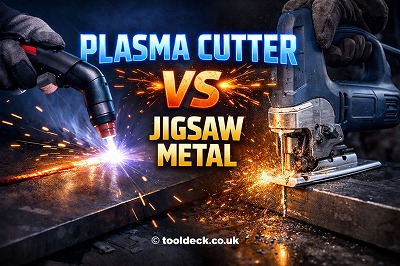
When it comes to cutting metal in the UK, two tools that often get compared are the plasma cutter and the jigsaw (for metal cutting). While both can cut metal, they are designed for very different purposes and deliver completely different results.
So, which one should you use?
In this complete guide to plasma cutter vs jigsaw metal, we’ll cover:
- How each tool works
- Key differences in performance
- Pros and cons
- Best use cases
- Which tool is right for your needs
Contents
- ⚠️ Why Choosing the Right Tool Matters
- 🔍 What Is a Plasma Cutter?
- 🔍 What Is a Jigsaw for Metal Cutting?
- ⚙️ Plasma Cutter vs Jigsaw Metal – Key Differences
- 🔹 1. Cutting Mechanism (Technology & Process)
- 🔹 2. Cutting Speed
- 🔹 3. Cut Quality & Edge Finish
- 🔹 4. Precision & Cutting Control
- 🔹 5. Material Thickness Capability
- 🔹 6. Material Compatibility
- 🔹 7. Portability & Ease of Use
- 🔹 8. Cost & Running Expenses
- 🔹 9. Heat & Material Distortion
- 🔹 10. Safety Considerations
- 🏁 Summary of Key Differences
⚠️ Why Choosing the Right Tool Matters
Using the wrong tool can lead to:
- Poor cut quality
- Increased work time
- Damaged materials
- Safety risks
👉 Understanding the difference between a plasma cutter vs jigsaw metal helps you achieve better results and work more efficiently.
🔍 What Is a Plasma Cutter?
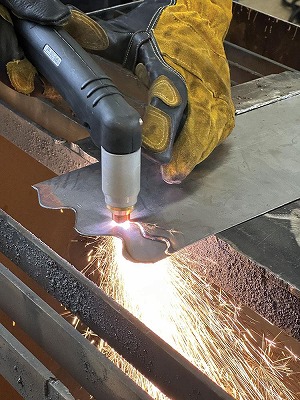
A plasma cutter uses a high-temperature plasma arc to cut through conductive metals.
⚙️ How It Works:
- Gas is ionised into plasma
- Plasma reaches temperatures up to 25,000°C
- The arc melts metal and blows it away
🔩 Materials:
- Steel
- Stainless steel
- Aluminium
- Copper
👉 Ideal for fast, clean, and precise cutting.
🔍 What Is a Jigsaw for Metal Cutting?
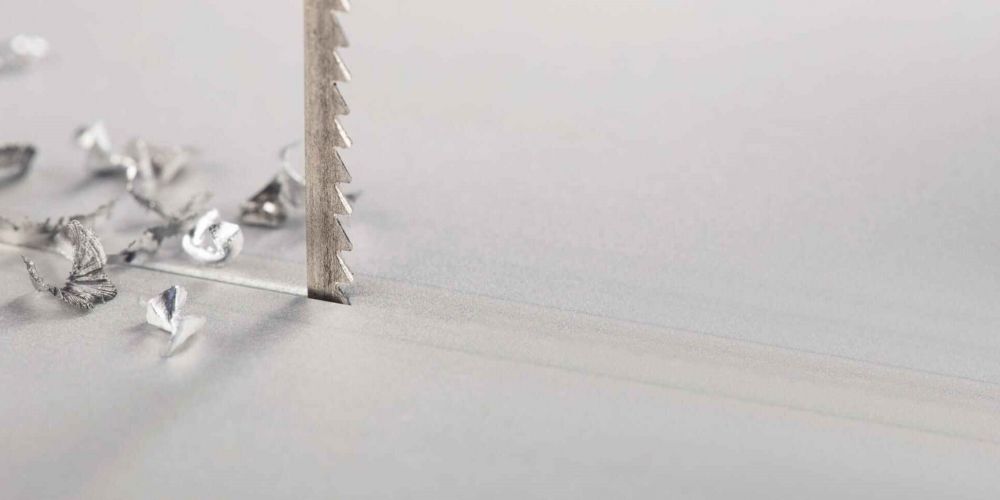
A jigsaw is a handheld power tool that uses a reciprocating blade to cut through materials, including metal when fitted with the correct blade.
⚙️ How It Works:
- Blade moves up and down rapidly
- Cuts through metal gradually
- Requires a suitable metal-cutting blade
🔧 Best For:
- Thin sheet metal
- Curved cuts
- DIY projects
👉 Ideal for light-duty and detailed cutting.
⚙️ Plasma Cutter vs Jigsaw Metal – Key Differences
🔹 1. Cutting Mechanism (Technology & Process)
⚡ Plasma Cutter:
- Uses an electrical plasma arc
- Gas is ionised into plasma (~25,000°C)
- Melts metal and ejects it instantly
🔧 Jigsaw (Metal Cutting):
- Uses a reciprocating blade
- Blade moves up and down rapidly
- Gradually cuts through metal
👉 Key Difference:
Plasma cutter = thermal cutting (melting metal)
Jigsaw = mechanical cutting (sawing metal)
🔹 2. Cutting Speed
Plasma Cutter:
- Extremely fast
- Cuts through metal in seconds
- Ideal for large or repeated cuts
Jigsaw:
- Slow cutting process
- Speed depends on blade type and thickness
- Requires steady manual control
👉 Verdict: Plasma cutter is significantly faster.
🔹 3. Cut Quality & Edge Finish
Plasma Cutter:
- Produces clean, smooth edges
- Minimal burrs
- May leave slight dross on thicker metal
Jigsaw:
- Produces rougher edges
- Leaves burrs and vibration marks
- Often requires sanding or grinding
👉 Verdict: Plasma cutter provides a more professional finish.
🔹 4. Precision & Cutting Control
Plasma Cutter:
- High precision for straight lines
- Can use guides or CNC systems
- Less suitable for tight curves
Jigsaw:
- Excellent for curved and intricate cuts
- Allows manual control for detailed shapes
- Accuracy depends on user skill
👉 Verdict:
- Straight cuts → Plasma cutter
- Curves & shapes → Jigsaw
🔹 5. Material Thickness Capability
Plasma Cutter:
- Cuts thin to thick metals easily
- Performance depends on amperage
Jigsaw:
- Limited to thin sheet metal
- Struggles with thicker materials
- Blade wear increases quickly
👉 Verdict: Plasma cutter is far more powerful.
🔹 6. Material Compatibility
Plasma Cutter:
- Works on all conductive metals:
- Steel
- Stainless steel
- Aluminium
Jigsaw:
- Can cut:
- Metal (with correct blade)
- Wood
- Plastic
👉 Verdict: Jigsaw is more versatile across materials, but plasma is superior for metal.
🔹 7. Portability & Ease of Use
Plasma Cutter:
- Requires:
- Power supply
- Sometimes compressed air
- Less portable
Jigsaw:
- Highly portable
- Plug-and-play tool
- Ideal for DIY use
👉 Verdict: Jigsaw is more convenient for quick jobs.
🔹 8. Cost & Running Expenses
Plasma Cutter:
- Higher upfront cost
- Consumables (tips, electrodes)
Jigsaw:
- Low cost
- Cheap replacement blades
👉 Verdict: Jigsaw is more budget-friendly.
🔹 9. Heat & Material Distortion
Plasma Cutter:
- Generates high heat
- Can cause slight distortion on thin metal
Jigsaw:
- Minimal heat
- No thermal distortion
👉 Verdict: Jigsaw is better for heat-sensitive materials.
🔹 10. Safety Considerations
Plasma Cutter:
- UV radiation
- Hot sparks and molten metal
- Requires PPE
Jigsaw:
- Blade breakage risk
- Flying debris
- Lower overall hazard level
👉 Verdict: Both require safety precautions, but plasma cutting involves higher heat risks.
🏁 Summary of Key Differences
| Category | Plasma Cutter | Jigsaw (Metal) |
|---|---|---|
| Cutting Method | Thermal (plasma arc) | Mechanical (blade) |
| Speed | Very fast | Slow |
| Cut Quality | Clean | Rough |
| Precision | Straight cuts | Curves |
| Thickness | Medium–thick | Thin only |
| Cost | Higher | Lower |
👉 In simple terms:
- Plasma cutter = speed, power, clean cuts
- Jigsaw = flexibility, affordability, detailed shapes
🛠️ When Should You Use a Plasma Cutter?
Use a plasma cutter for:
- Fabrication work
- Cutting thick metal
- Straight cuts
- Professional projects
👉 Best for power and efficiency.
🛠️ When Should You Use a Jigsaw?
Use a jigsaw for:
- Thin sheet metal
- Curved or intricate cuts
- DIY projects
- Occasional use
👉 Best for flexibility and detail work.
🔄 Do You Need Both?
✔ For many UK users:
- Plasma cutter → main cutting
- Jigsaw → detail work
👉 They complement each other well.
🧠 Pro Tips for Users
- Use correct blade for metal when using jigsaw
- Use plasma cutter for speed and clean cuts
- Clamp material securely
- Always wear PPE
❌ Common Mistakes to Avoid
❌ Using jigsaw for thick metal
✔ Use plasma cutter
❌ Using plasma cutter for fine curves
✔ Use jigsaw
🛡️ Safety Considerations
Plasma Cutter:
- UV radiation
- Sparks
- Heat
Jigsaw:
- Blade breakage
- Sharp edges
- Vibration
👉 Always follow safety procedures.
❓ FAQs
Which is better: plasma cutter or jigsaw?
Depends on the task.
Can a jigsaw cut thick metal?
No — only thin materials.
Is plasma cutter worth it?
Yes, for frequent or heavy work.
Which is better for curves?
Jigsaw.
🏁 Final Thoughts
When comparing a plasma cutter vs jigsaw metal, plasma cutters offer speed and power for heavy-duty cutting, while jigsaws provide flexibility for thin materials and curved cuts. Choosing the right tool depends on your project requirements.




Leave a Reply