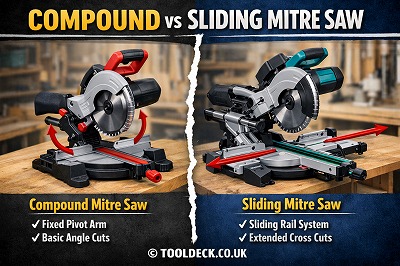
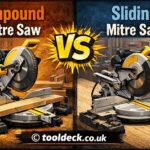
Choosing between a compound vs sliding mitre saw comes down to cutting capacity vs simplicity. A compound mitre saw is compact and precise, while a sliding version offers greater cutting width for larger materials.
This guide breaks down the key differences to help you pick the right saw.
⚙️ What Is a Compound Mitre Saw?
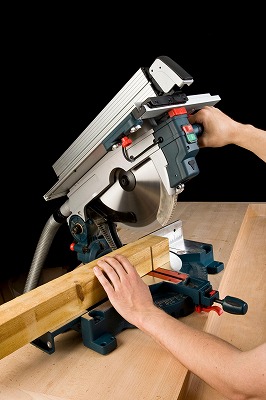
A compound mitre saw can make:
- Crosscuts
- Mitre cuts (left/right angles)
- Bevel cuts (tilted blade)
Key features:
- Fixed head (no sliding rails)
- Compact design
- High accuracy for smaller workpieces
👉 Best for trim work and small to medium cuts.
🔧 What Is a Sliding Mitre Saw?
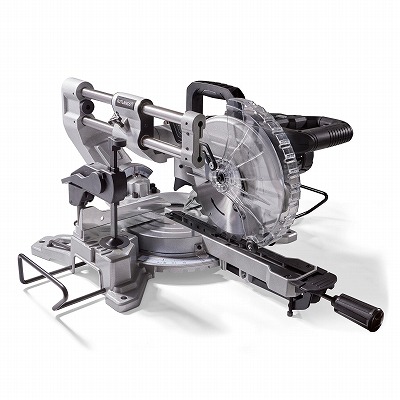
A sliding mitre saw includes rails that allow the blade to move forward and backward.
Key features:
- Sliding mechanism increases cutting width
- Handles larger materials
- Available in single or dual bevel
Compound vs Sliding Mitre Saw – Key Differences
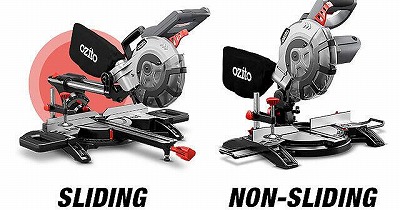
When comparing a compound vs sliding mitre saw, the biggest differences come down to cutting capacity, machine size, precision, and versatility. While both tools can make mitre and bevel cuts, the sliding feature dramatically expands what the saw can handle.
Below is a detailed breakdown of how they differ in real-world use.
1. Cutting Capacity (Width & Depth)
🔧 Compound Mitre Saw:
- Fixed head (no forward movement)
- Limited cutting width
- Best for:
- Skirting boards
- Studs
- Small timber
🔌 Sliding Mitre Saw:
- Blade slides forward on rails
- Significantly wider cutting capacity
- Can cut:
- Wide boards
- Flooring planks
- Large timber sections
🎯 Real Impact:
- Compound saw = limited reach
- Sliding saw = handles large materials easily
👉 Winner: Sliding Mitre Saw
Essential for cutting wide workpieces.
2. Accuracy & Stability
🔧 Compound Mitre Saw:
- Fewer moving parts
- More rigid structure
- Slightly higher inherent stability
🔌 Sliding Mitre Saw:
- Rail system introduces slight movement (play)
- Still highly accurate, but depends on build quality
🎯 Real Impact:
- Compound saw = ultra-consistent cuts
- Sliding saw = excellent accuracy, but slightly more variable
👉 Winner: Compound Mitre Saw (slightly)
Best for fine precision work.
3. Versatility & Range of Applications
🔧 Compound Mitre Saw:
- Ideal for:
- Trim work
- Picture frames
- Light carpentry
- Limited for larger projects
🔌 Sliding Mitre Saw:
- Handles:
- Large timber
- Decking
- Flooring
- Construction materials
🎯 Real Impact:
- Compound saw = specialised tool
- Sliding saw = broader application
👉 Winner: Sliding Mitre Saw
4. Size, Weight & Portability
🔧 Compound Mitre Saw:
- Compact and lightweight
- Easy to transport
- Suitable for small workshops
🔌 Sliding Mitre Saw:
- Larger and heavier
- Rails add bulk
- Less portable
🎯 Real Impact:
- Compound saw = easy to move and store
- Sliding saw = more permanent setup
👉 Winner: Compound Mitre Saw
5. Workspace & Clearance Requirements
🔧 Compound Mitre Saw:
- Minimal rear clearance needed
- Fits easily on small benches
🔌 Sliding Mitre Saw:
- Requires extra space behind the saw for rails
- Needs larger workstation
🎯 Real Impact:
- Compound saw = space-saving
- Sliding saw = needs planning
👉 Winner: Compound Mitre Saw
6. Ease of Use & Learning Curve
🔧 Compound Mitre Saw:
- Simple operation
- Fewer adjustments
- Beginner-friendly
🔌 Sliding Mitre Saw:
- Requires:
- Managing sliding motion
- Better control technique
🎯 Real Impact:
- Compound saw = quick to learn
- Sliding saw = slightly more complex
👉 Winner: Compound Mitre Saw
7. Speed & Productivity
🔧 Compound Mitre Saw:
- Faster for small, repetitive cuts
- Less setup time
🔌 Sliding Mitre Saw:
- More efficient for:
- Large materials
- Wide cuts
- Slightly slower setup
🎯 Real Impact:
- Compound saw = speed for small jobs
- Sliding saw = efficiency for big jobs
👉 Winner:
- Small tasks → Compound saw
- Large tasks → Sliding saw
8. Price & Value
🔧 Compound Mitre Saw:
- Lower cost
- Great value for DIY users
🔌 Sliding Mitre Saw:
- Higher price due to added mechanism
- Better long-term value for professionals
🎯 Real Impact:
- Compound saw = budget-friendly
- Sliding saw = investment tool
👉 Winner: Compound Mitre Saw (for most users)
9. Maintenance & Durability
🔧 Compound Mitre Saw:
- Fewer moving parts
- Lower maintenance
🔌 Sliding Mitre Saw:
- Rails require:
- Cleaning
- Lubrication
- More wear over time
🎯 Real Impact:
- Compound saw = simple upkeep
- Sliding saw = more maintenance
👉 Winner: Compound Mitre Saw
10. Who Should Use Each Type?
🔧 Compound Mitre Saw:
Best for:
- DIY users
- Small workshops
- Trim and finish work
🔌 Sliding Mitre Saw:
Best for:
- Professionals
- Construction work
- Large material cutting
The difference between a compound vs sliding mitre saw comes down to capacity vs simplicity. A compound mitre saw offers precision, compact size, and ease of use, while a sliding mitre saw provides greater cutting capacity and versatility for larger projects.
Choosing the right one depends on whether you prioritise space-saving precision or maximum cutting capability.
📊 Quick Comparison Table
| Feature | Compound Mitre Saw | Sliding Mitre Saw |
|---|---|---|
| Cutting Capacity | ⭐⭐ | ⭐⭐⭐⭐⭐ |
| Accuracy | ⭐⭐⭐⭐⭐ | ⭐⭐⭐⭐ |
| Portability | ⭐⭐⭐⭐⭐ | ⭐⭐ |
| Versatility | ⭐⭐⭐ | ⭐⭐⭐⭐⭐ |
| Price | ⭐⭐⭐⭐⭐ | ⭐⭐⭐ |
When to Choose a Compound Mitre Saw
Choose a compound mitre saw if you:
- Work with smaller materials
- Need high precision
- Have limited space
- Want a budget-friendly option
👉 Best for DIY, trim work, and small projects.
When to Choose a Sliding Mitre Saw
Choose a sliding mitre saw if you:
- Cut wide boards or timber
- Need maximum versatility
- Work on larger projects
- Have enough workspace
👉 Best for professionals and larger jobs.
❌ Common Mistakes to Avoid
❌ Buying compound saw for large materials
✔ Choose sliding saw
❌ Buying sliding saw without space
✔ Check workspace first
❓ FAQs
Is a sliding mitre saw better?
Better for large cuts, not always necessary.
Do I need a sliding saw for DIY?
Not usually—compound saw is enough.
Which is more accurate?
Compound mitre saw (slightly).
Is sliding mitre saw worth it?
Yes, if you cut wide materials.
Final Thoughts
When comparing compound vs sliding mitre saw, the choice comes down to capacity vs simplicity. A compound mitre saw is compact and precise, while a sliding mitre saw offers greater flexibility for larger cuts.
Leave a Reply