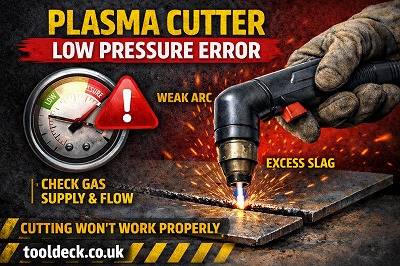
If your plasma cutter shows a low pressure error, it means the machine is not receiving enough air pressure to operate correctly. This is a very common issue in UK workshops and DIY setups, and it can stop your machine from cutting altogether.
Without proper air pressure, your plasma cutter cannot generate a stable arc, leading to:
- Weak or no arc
- Poor cut quality
- Excessive slag
- Machine shutdown or error codes
The good news? Most low pressure errors are easy to diagnose and fix.
In this complete guide, you’ll learn:
- What causes low pressure errors
- Step-by-step solutions
- How to prevent the issue
- Pro tips for reliable performance
⚠️ Signs of a Low Pressure Error
Before troubleshooting, confirm these symptoms:
- ❌ Machine displays low pressure warning
- ❌ Plasma arc fails to start
- ❌ Weak or unstable cutting performance
- ❌ Airflow feels weak or inconsistent
- ❌ Compressor struggles to maintain pressure
👉 These indicate insufficient airflow to support plasma cutting.
Plasma Cutter Low Pressure Error – Common Causes & Fixes
🔹 1. Incorrect Air Pressure Settings (Regulator Misadjusted)
❌ Why It Happens:
- Regulator set below required PSI
- User sets pressure while air is not flowing
- Misreading gauge
🔍 Symptoms:
- Low pressure warning on display
- Arc fails to start
- Weak airflow from torch
✅ Fix:
- Adjust regulator to recommended range (usually 60–90 PSI)
- Always set pressure while pressing the torch trigger (air flowing)
- Double-check gauge accuracy
👉 Pro Tip: Static pressure (no airflow) is misleading—always check dynamic pressure under load.
🔹 2. Air Compressor Cannot Maintain Required CFM
❌ Why It Happens:
- Compressor provides enough PSI but not enough airflow (CFM)
- Small DIY compressors struggle under continuous use
🔍 Symptoms:
- Pressure drops during cutting
- Compressor runs constantly
- Intermittent low pressure errors
✅ Fix:
- Check plasma cutter airflow requirements (e.g., 4–6 CFM or more)
- Upgrade to a compressor with sufficient CFM output
- Use a larger tank for better air reserve
👉 Pro Tip: PSI alone is not enough—CFM is critical for sustained plasma cutting.
🔹 3. Air Leaks in Hoses, Fittings, or Connections
❌ Why It Happens:
- Loose fittings
- Worn seals or O-rings
- Cracked hoses
🔍 Symptoms:
- Hissing sound
- Compressor cycles frequently
- Pressure drops before reaching machine
✅ Fix:
- Inspect entire air system:
- Hoses
- Quick-connect fittings
- Couplers
- Use soapy water test to detect leaks
- Tighten or replace faulty components
👉 Pro Tip: Even tiny leaks can cause significant pressure loss over time.
🔹 4. Blocked or Dirty Air Filters
❌ Why It Happens:
- Dust, oil, or debris clog filters
- Lack of maintenance
🔍 Symptoms:
- Reduced airflow
- Pressure drop at machine
- Poor cutting performance
✅ Fix:
- Clean or replace filters regularly
- Install high-quality inline filters
- Check filter condition monthly
👉 Pro Tip: A clogged filter acts like a choke point in your air system.
🔹 5. Moisture Build-Up in Air System
❌ Why It Happens:
- Condensation inside compressor tank
- Humid UK climate
- No moisture control system
🔍 Symptoms:
- Pressure fluctuations
- Weak arc or inconsistent cutting
- Water visible in airline
✅ Fix:
- Drain compressor tank daily
- Install:
- Moisture separator
- Air dryer (recommended)
- Use desiccant filters for best performance
👉 Pro Tip: Moisture not only reduces pressure efficiency but also damages consumables.
🔹 6. Kinked, Crushed, or Undersized Air Hose
❌ Why It Happens:
- Hose bent or twisted
- Using narrow-diameter hose
- Physical damage
🔍 Symptoms:
- Reduced airflow at torch
- Pressure drop under load
- Inconsistent cutting
✅ Fix:
- Straighten or replace damaged hoses
- Use larger diameter hose (e.g., 3/8″)
- Keep hose as short as practical
👉 Pro Tip: Long or thin hoses can reduce airflow dramatically even without leaks.
🔹 7. Faulty or Inaccurate Pressure Regulator
❌ Why It Happens:
- Internal regulator wear
- Incorrect calibration
- Cheap or low-quality regulator
🔍 Symptoms:
- PSI reading doesn’t match actual pressure
- Pressure fluctuates unexpectedly
- Cannot maintain stable setting
✅ Fix:
- Test regulator with another gauge
- Replace faulty regulator
- Use a high-quality regulator for stability
👉 Pro Tip: Don’t rely on a single gauge—verify accuracy if unsure.
🔹 8. Poor Quick-Connect Fittings or Improper Sealing
❌ Why It Happens:
- Loose connections
- Worn couplers
- Missing thread sealant
🔍 Symptoms:
- Air leaks at connection points
- Pressure loss during operation
✅ Fix:
- Reconnect fittings securely
- Use PTFE tape on threaded connections
- Replace worn quick-connect couplers
👉 Pro Tip: Cheap fittings are a common hidden cause of pressure issues.
🔹 9. Long Air Line Distance from Compressor
❌ Why It Happens:
- Compressor placed far from plasma cutter
- Pressure drops over long distances
🔍 Symptoms:
- Lower pressure at machine than at compressor
- Delayed airflow response
✅ Fix:
- Move compressor closer
- Use shorter air lines
- Increase hose diameter
👉 Pro Tip: Distance + small hose = major pressure drop.
🔹 10. Internal Pressure Sensor or Machine Fault
❌ Why It Happens:
- Faulty pressure sensor
- Electronic error inside plasma cutter
🔍 Symptoms:
- Low pressure error even when PSI is correct
- Machine refuses to operate
✅ Fix:
- Reset machine
- Check manual for error codes
- Contact manufacturer or technician
👉 Pro Tip: Rule out all external causes before assuming internal faults.
Step-by-Step Quick Fix Checklist
- ✅ Check regulator settings
- ✅ Inspect hoses for leaks
- ✅ Test compressor output
- ✅ Clean filters
- ✅ Drain moisture
- ✅ Check fittings
- ✅ Reset machine
👉 These steps solve most low pressure issues.
Pro Tips to Prevent Low Pressure Errors
- Use a high-quality compressor
- Install air dryer and filter
- Maintain hoses and fittings
- Check pressure regularly under load
- Keep system clean and dry
❌ Common Mistakes to Avoid
❌ Setting pressure without airflow
✔ Always adjust under load
❌ Ignoring small leaks
✔ Fix immediately
❌ Using undersized compressor
✔ Match machine requirements
Safety Tips
- Turn off machine before inspection
- Release pressure safely
- Avoid damaged hoses
❓ FAQs
Why does my plasma cutter show low pressure?
Usually due to incorrect settings, leaks, or compressor issues.
What PSI should I use?
Typically 60–90 PSI (check manual).
Can leaks cause low pressure error?
Yes — very common.
Do I need an air dryer?
Highly recommended in the UK.
Final Thoughts
A plasma cutter low pressure error is usually caused by airflow issues such as incorrect pressure settings, leaks, or an inadequate compressor. By following this guide, you can quickly fix the problem and restore reliable cutting performance.


Leave a Reply