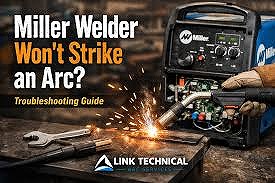
You flip the switch, grab your electrode, tap the metal—and nothing happens. No spark, no arc, just frustration. If your arc welder is not striking an arc, you’re definitely not alone. This is one of the most common problems in stick welding, especially for beginners, but it can also catch experienced welders off guard.
The good news? It’s almost always fixable—and often in just a few minutes once you know what to look for.
Why Your Arc Won’t Strike
Think of striking an arc like lighting a match. You need the right conditions—heat, contact, and proper setup. If any of these are off, the arc simply won’t start.
Let’s break down the most common causes.
1. Poor Ground Connection
This is the number one culprit.
If your ground clamp isn’t making solid contact, electricity can’t complete the circuit. No circuit = no arc. It’s like trying to charge your phone with a broken cable—it just won’t work.
Fix:
- Attach the clamp directly to clean, bare metal
- Avoid painted, rusty, or oily surfaces
- Make sure the clamp is tight and not worn out
A quick tip: If you see sparks at the clamp instead of the electrode, your grounding is bad.
2. Dirty or Rusty Workpiece
Stick welding is forgiving—but not that forgiving.
Heavy rust, paint, grease, or dirt can prevent the arc from forming properly. The electrode needs clean metal to initiate the arc.
Fix:
- Use a wire brush or grinder to clean the surface
- Remove paint, oil, and rust in the weld area
- Aim for shiny, bare metal before striking
It’s like trying to glue two surfaces together—if they’re dirty, nothing sticks.
3. Low Amperage Setting
If your amperage is too low, the electrode won’t generate enough heat to start the arc.
This is especially common when switching electrode sizes or materials without adjusting settings.
Fix:
- Increase amperage slightly (start with +10–20 amps)
- Follow the recommended range for your electrode type
- Test on scrap metal before welding
Too little power is like trying to boil water with a candle—it just won’t get there.
4. Incorrect Electrode Type or Condition
Not all electrodes behave the same. Some are easier to strike than others.
Also, moist or damaged electrodes can make arc starting nearly impossible.
Fix:
- Use beginner-friendly rods like E6013 or E6011
- Store electrodes in a dry environment
- Avoid rods with cracked or flaking coating
If your rods feel damp, they probably are—and that’s a problem.
5. Wrong Polarity Settings
Stick welders allow different polarity settings (DCEN, DCEP, or AC). Using the wrong one for your electrode can prevent arc initiation.
Fix:
- Check electrode packaging for correct polarity
- Ensure machine settings match the electrode type
- Double-check cable connections
It’s like plugging something into the wrong voltage—it just won’t function properly.
6. Arc Length Too Long or Incorrect Technique
Sometimes the issue isn’t the machine—it’s the technique.
If you’re holding the electrode too far away, the arc won’t start. Beginners often hesitate and keep too much distance.
Fix:
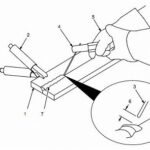
- Tap or scratch the electrode against the metal
- Keep arc length about the same as electrode diameter
- Strike confidently—don’t be timid
Think of it like striking a match—you need contact and motion, not hesitation.
7. Faulty Equipment or Loose Connections
If everything else checks out, your machine or cables might be the issue.
Loose connections, worn cables, or internal faults can stop the arc from forming.
Fix:
- Inspect cables for damage
- Tighten all connections
- Check electrode holder for wear
- Test with another machine if possible
A faulty setup can silently kill your arc before it even starts.
8. Power Supply Issues
Sometimes the problem isn’t the welder—it’s the power source.
Low voltage or unstable power can prevent arc initiation.
Fix:
- Ensure proper input voltage
- Avoid long extension leads if possible
- Use a dedicated power source
Your welder needs consistent power—anything less can cause problems.
Quick Troubleshooting Checklist
When your arc won’t strike, run through this quick checklist:
- ✅ Ground clamp on clean metal
- ✅ Workpiece cleaned properly
- ✅ Amperage set correctly
- ✅ Dry, suitable electrode
- ✅ Correct polarity
- ✅ Proper technique
- ✅ No loose cables
- ✅ Stable power supply
Go through these one by one, and you’ll almost always find the issue.
Pro Tips for Easy Arc Starting
Once you fix the basics, these tips will make your life much easier:
- Use the scratch start method instead of tapping if you struggle
- Practice on scrap metal before real work
- Keep electrodes warm and dry
- Maintain a steady hand—confidence matters more than strength
With a bit of practice, striking an arc becomes second nature. You won’t even think about it—you’ll just do it.
Final Thoughts
When your arc welder won’t strike an arc, it’s rarely something complicated. Most of the time, it’s a simple issue like grounding, settings, or technique. The key is to stay calm, go through the basics, and fix one thing at a time.
Once everything is set up correctly, you’ll feel it instantly—that satisfying buzz of a stable arc starting up. And from there, everything else gets a whole lot easier.

Leave a Reply