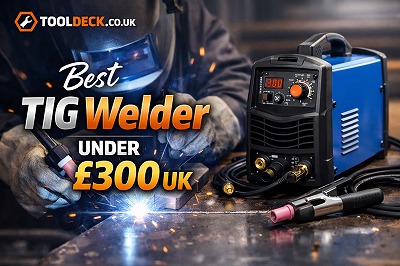
If you’re searching for the best TIG welder under £300 UK, you’re entering one of the most competitive and value-packed categories in the welding market. At this price point, you can expect serious performance, modern inverter technology, and even advanced features like AC/DC capability and digital controls.
TIG welding is widely regarded as the most precise welding method, ideal for:
- Stainless steel
- Aluminium
- Thin materials
- Automotive and fabrication work
While TIG welding requires more skill than MIG or stick welding, the results are far superior in terms of cleanliness, strength, and finish quality.
In this guide, we review the top 5 TIG welders under £300 in the UK, helping you find the perfect machine for your needs—whether you’re a beginner, DIY enthusiast, or advanced user.
Best TIG Welder Under £300 UK 2026 – Detailed Reviews
| Model | Type | Output | Aluminium Welding | Pulse | Duty Cycle | Weight | Best For |
|---|---|---|---|---|---|---|---|
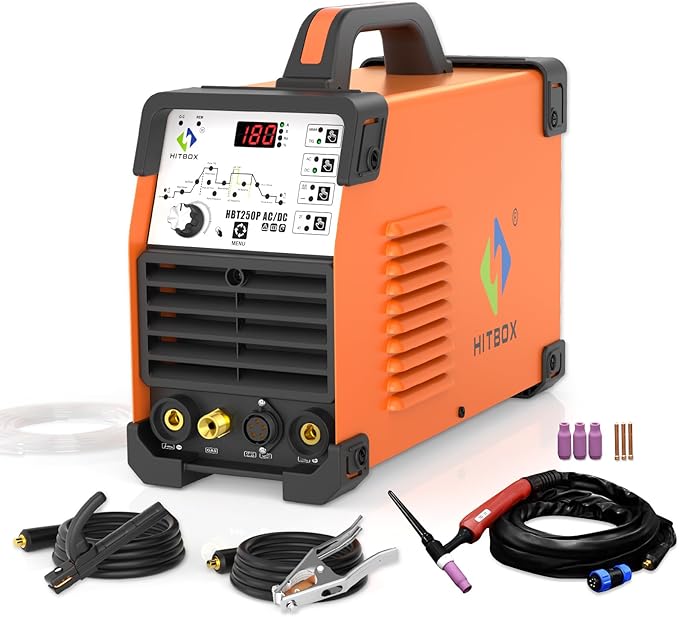
 HITBOX HBT250P HITBOX HBT250P | AC/DC TIG + MMA | 200A | ✅ Yes | ✅ Yes (0.5–200Hz) | 10–90% | 10.95kg | Precision & aluminium |
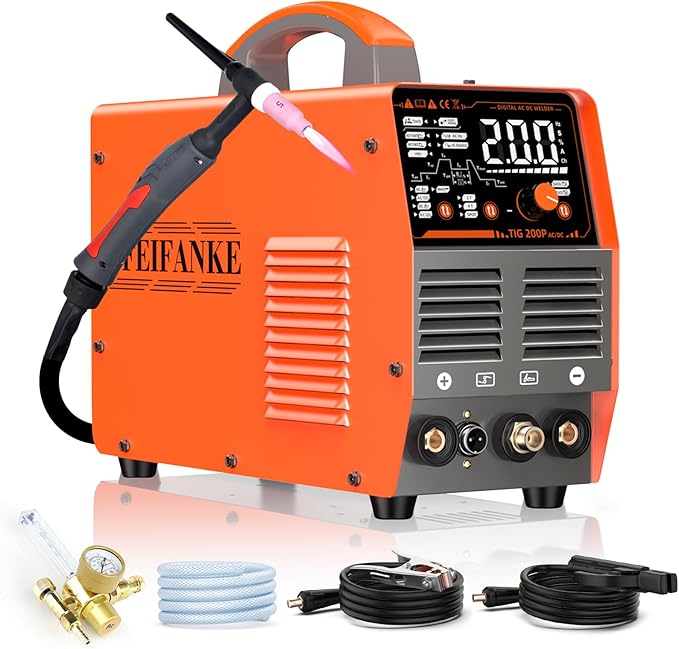
 FEIFANKE 7-in-1 FEIFANKE 7-in-1 | AC/DC TIG + MMA | 200A | ✅ Yes | ✅ Yes | High | 14.02kg | Multi-purpose use |
 HZXVOGEN HVT250P HZXVOGEN HVT250P | AC/DC TIG + MMA | 200A | ✅ Yes | ✅ Yes | High | ~10kg | Control & flexibility |
 ANDELI TIG-200 DC ANDELI TIG-200 DC | DC TIG + MMA | 200A | ❌ No | ❌ No | 60% | 6kg | Budget steel welding |
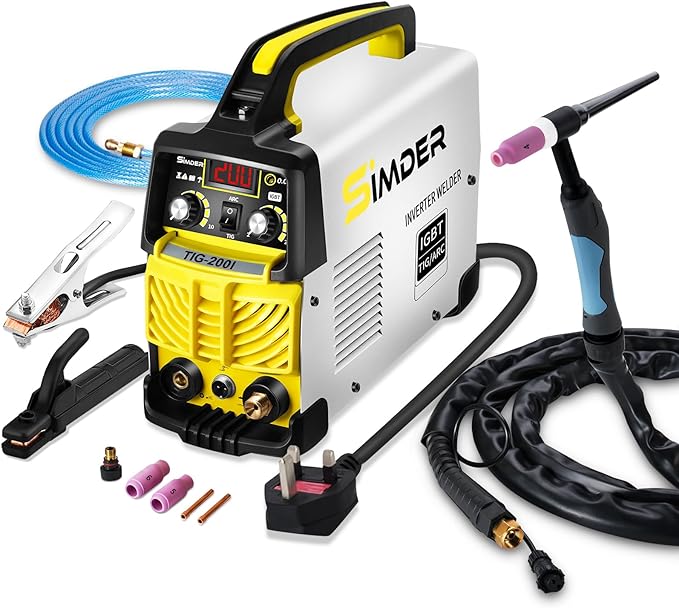
 SSIMDER TIG-200I SSIMDER TIG-200I | DC TIG + MMA | 135A | ❌ No | ❌ No | Moderate | Lightweight | Beginners & DIY |
1. HITBOX HBT250P AC/DC 200A – Best for Aluminium & Precision Work
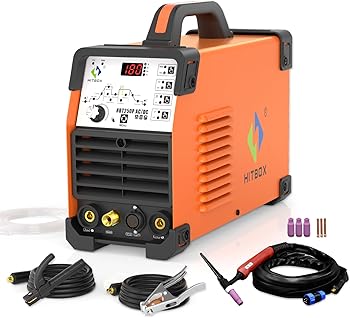

The HITBOX HBT250P AC/DC is easily one of the most powerful and feature-rich TIG welders you can get under £300 in the UK, especially if aluminium welding is a priority.
Running on a 240V input, this machine delivers a highly flexible output range with AC TIG adjustable from 5–200A and DC TIG from 20–200A, while also supporting MMA welding up to 160A. This makes it suitable for everything from delicate sheet metal work to heavier fabrication.
What really sets it apart is its pulse frequency control (0.5–200Hz) combined with an AC duty cycle range of 10–90%, allowing extremely precise heat input control. In practice, this means you can weld ultra-thin aluminium down to 0.3mm—a level of performance rarely seen at this price point.
The machine is loaded with advanced controls including pre-gas and post-gas timing, start current, peak current, up-slope/down-slope, AC frequency, and pulse frequency adjustments. These allow you to fine-tune every stage of the weld for clean, consistent results.
The HF ignition system ensures non-contact arc starting, reducing tungsten contamination and improving weld quality. Additional features like hot start, anti-stick, arc force, dual cooling, and overheat protection further enhance reliability.
At 10.95kg (50 x 29 x 37 cm), it’s not the lightest, but still manageable for workshop use. It also supports 2T/4T modes and foot pedal control (not included), making it suitable for longer weld runs.
👍 Pros
- True AC/DC TIG (ideal for aluminium and steel)
- Wide pulse range (0.5–200Hz) for precision
- Welds ultra-thin aluminium (0.3mm)
- Advanced parameter control
- Stable HF arc start
👎 Cons
- Foot pedal not included
- Slight learning curve
- Heavier than entry-level welders
2. FEIFANKE 200A AC/DC 7-in-1 TIG Welder – Best Multi-Function Option
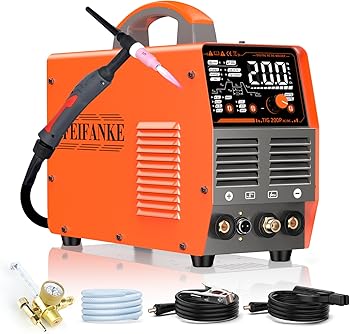
The FEIFANKE 200A AC/DC 7-in-1 TIG Welder is designed for users who want maximum versatility in a single machine. It combines AC/DC TIG, pulse TIG, spot welding, and MMA, making it ideal for both DIY users and professionals.
Delivering up to 200A output, this welder handles a wide range of materials including steel, stainless steel, aluminium, titanium, copper, and magnesium. The inclusion of non-contact HF induction arc start ensures smooth ignition while reducing electrode wear and material waste.
One standout feature is the large LED display, which allows you to clearly read amperage, welding mode, and settings without removing your helmet—something that significantly improves workflow in real use.
The machine uses an advanced MCU digital control system combined with IGBT inverter technology, ensuring stable arc performance, minimal spatter, and clean welds that require little to no post-cleaning.
For TIG welding, the adjustable post-gas flow (1–10 seconds) helps protect the weld pool from oxidation, improving finish quality and extending consumable life.
It also includes a professional WP26 TIG torch (4m) with features like flexible head, gas control, current reduction, and high-frequency ignition, alongside safety systems such as overvoltage, overcurrent, overload, and overheating protection.
With a total weight of 14.02kg, it’s slightly heavier than others but offers significantly more functionality.
👍 Pros
- Full AC/DC TIG + Pulse + MMA (7-in-1)
- Large LED display for easy operation
- Works with a wide range of metals
- Stable arc with minimal spatter
- High-quality WP26 torch included
👎 Cons
- Heavier than most competitors
- Slightly complex for beginners
- Interface may feel overwhelming initially
3. HZXVOGEN HVT250P AC/DC 200A – Best for Control & Stability

The HZXVOGEN HVT250P is a strong contender if you want precise control and stable welding performance without stepping into premium pricing.
Operating on 240V with a maximum output of 200A, this machine supports 6 welding modes, including DC TIG, AC TIG, pulse TIG (AC/DC), square wave AC, and MMA. This makes it suitable for both non-ferrous metals like aluminium and magnesium, as well as steel and stainless steel.
Its MCU digital control system allows full adjustment of key welding parameters such as pre-gas time, start current, rise time, peak current, AC frequency, pulse frequency, fall time, and post-gas time. This level of control helps improve weld quality while reducing tungsten consumption.
In practical use, it can handle aluminium thickness from 0.5mm to 5mm and metals up to 10mm, making it versatile enough for both light and medium-duty tasks.
The large control panel improves visibility of settings, while 2T/4T modes and optional foot pedal support allow flexibility depending on your workflow.
It also comes with a complete accessory kit, including a TIG torch (approx. 4m), ground clamp, electrode holder, and gas hose—so you can start welding immediately.
👍 Pros
- Full AC/DC TIG with pulse options
- Excellent parameter control
- Handles a wide thickness range
- Large, easy-to-read control panel
- Complete accessory kit included
👎 Cons
- Not as refined as premium models
- Slightly bulky
- Learning curve for beginners
4. ANDELI TIG-200 200A DC TIG/MMA Welder – Best Simple & Affordable Choice

The TIG-200 DC Inverter Welder is a great option if you want a simple, reliable machine for steel welding without paying for features you don’t need.
It delivers 200A TIG output and 180A MMA output at a 60% duty cycle, which is sufficient for most home and light workshop applications. Running on 240V single-phase power, it’s easy to use in standard UK settings.
The HF start system ensures easy arc ignition and helps extend tungsten life, while the digital control panel and LED display make it simple to adjust settings accurately.
Weighing just 6kg (380 x 140 x 270 mm), it’s highly portable and ideal for mobile work.
It also includes useful features like adjustable pre-gas and gas delay, plus MMA functions such as auto hot start, arc force, and anti-stick.
However, as a DC-only TIG welder, it cannot weld aluminium—so it’s best suited for steel, stainless steel, copper, and similar metals.
👍 Pros
- Lightweight and portable (6kg)
- Simple and easy to use
- HF start improves weld quality
- Good duty cycle for the price
- Full accessory kit included
👎 Cons
- No AC mode (no aluminium welding)
- Basic features only
- Limited precision control
5. SSIMDER TIG-200I 135A – Best for Beginners & DIY
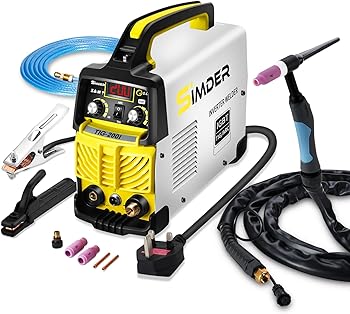
The SSIMDER TIG-200I is designed with beginners in mind, offering a simple 2-in-1 TIG and MMA setup that’s ideal for home use, DIY projects, and light fabrication.
It supports TIG and stick welding, with a working thickness range of 0.5mm to 3mm, making it suitable for smaller jobs like auto repair, metal crafts, and workshop tasks.
The machine uses IGBT inverter technology, providing stable performance along with built-in protections against overvoltage, overcurrent, and overheating.
A useful feature is the adjustable gas post-flow (1–10 seconds), which helps protect the weld from oxidation and improves overall finish quality.
For MMA welding, it supports common rods like 6013, 7018, and 6010, making it flexible for general-purpose use.
However, like other entry-level machines, it is DC-only, so aluminium welding is not supported.
👍 Pros
- Very beginner-friendly
- Lightweight and compact
- Affordable entry-level option
- Good safety protections
- Suitable for DIY and light work
👎 Cons
- Lower power (135A)
- No aluminium welding
- Limited to thin materials
How to Choose the Best TIG Welder Under £300 UK


Choosing the best TIG welder under £300 UK requires more than just comparing prices. At this budget, you’re entering a category where machines can range from basic DC TIG welders to advanced AC/DC units with digital controls. Understanding what features actually matter will help you avoid wasting money and ensure you get a welder that suits your needs.
Below are the key factors you should consider before making your decision.
1. AC vs DC TIG – The Most Important Feature
The biggest difference between TIG welders in this price range is whether they support DC only or AC/DC welding.
- DC TIG welders:
- Suitable for mild steel and stainless steel
- Ideal for general fabrication and repair work
- Usually cheaper and simpler
- AC/DC TIG welders:
- Required for aluminium welding
- Offer greater versatility
- Typically include more advanced controls
Aluminium requires AC current to break through its oxide layer, which is why DC-only machines struggle with it.
👉 If you only plan to weld steel → choose a DC TIG welder
👉 If you want full versatility → invest in an AC/DC TIG welder (best long-term choice)
2. Power Output and Real Welding Capability
Most TIG welders under £300 offer between 140A and 200A+, but real performance depends on how stable that power is.
- 140A–160A:
- Thin materials
- Light DIY work
- Small repairs
- 160A–180A:
- General fabrication
- Automotive work
- 180A–200A+:
- Thicker materials
- Longer weld runs
Higher amperage also improves arc stability at lower settings, which is critical for TIG welding thin materials without burn-through.
👉 For most users, a 160A–200A welder provides the best balance.
3. HF Start vs Lift TIG (Ease of Use & Weld Quality)
The arc start method has a major impact on usability:
- HF Start (High Frequency):
- Starts the arc without contact
- Produces cleaner welds
- Easier for beginners
- Lift TIG:
- Requires touching the tungsten to the workpiece
- Can contaminate the weld
- More basic and harder to control
👉 If possible, choose a welder with HF start, especially if you’re new to TIG welding.
4. Pulse TIG – A Game-Changer for Precision
Pulse TIG is one of the most valuable features you can get under £300. It alternates between high and low current, giving you much better control.
Benefits include:
- Reduced heat input
- Less warping on thin materials
- Cleaner weld appearance
- Easier control for beginners
This is especially useful when working with:
- Stainless steel
- Thin sheet metal
- Detailed fabrication
👉 If you want professional-looking results, look for a pulse TIG welder.
5. Duty Cycle and Cooling Performance
TIG welding often involves longer welds, so duty cycle is very important.
Example:
- 30% duty cycle at 180A → 3 minutes welding, 7 minutes cooling
Better machines include:
- Efficient cooling fans
- Thermal overload protection
- Stable performance at higher loads
👉 For regular use, choose a welder with a strong duty cycle and reliable cooling system.
6. Multi-Process Capability (TIG + MMA)
Many TIG welders under £300 also support MMA (stick welding), which adds significant value.
Advantages:
- Allows outdoor welding
- Works on rusty or dirty materials
- Provides backup welding method
👉 A multi-process welder is a smarter long-term investment.
7. Digital Controls and User Interface
Modern welders in this category often include digital displays and advanced controls, which improve usability and precision.
Benefits:
- Accurate amperage adjustment
- Better consistency
- Easier setup for different materials
Some machines also include synergy settings, which automatically adjust parameters based on your input.
👉 Beginners benefit from simple digital interfaces, while advanced users will appreciate fine-tuning controls.
8. Build Quality and Reliability
At this price point, build quality can vary significantly.
Look for:
- Solid metal casing
- High-quality torch and cables
- Reliable internal components
Better-built machines offer:
- Longer lifespan
- More consistent performance
- Greater safety
👉 Avoid the cheapest option—invest in a well-reviewed, durable model.
9. Portability and Workshop Setup
Most TIG welders under £300 are inverter-based, meaning they are:
- Lightweight
- Compact
- Easy to transport
This makes them ideal for:
- Home workshops
- Mobile work
- Limited spaces
👉 If you need flexibility, choose a portable inverter TIG welder.
10. Gas Requirements and Total Setup Cost
TIG welding requires additional equipment:
- Argon gas cylinder
- Regulator
- Torch setup
These costs can add up, so it’s important to factor them into your budget.
👉 The welder may cost £300, but your total setup cost will be higher.
Final Buying Tip
When choosing the best TIG welder under £300 UK, focus on your actual needs:
- Beginners:
→ Choose a simple DC TIG with HF start and stable arc - Home users:
→ Choose a 160A–200A multi-process welder - Advanced users:
→ Choose an AC/DC TIG welder with pulse and digital controls
At this price range, you can get a machine that delivers near-professional performance. The key is choosing the right balance of power, features, and usability for your specific projects.
FAQs
What is the best TIG welder under £300 UK?
The HZXVOGEN HVT250P is the most advanced option, while HITBOX is the best budget choice.
Can beginners use TIG welders?
Yes, but they require practice compared to MIG welders.
Can I weld aluminium under £300?
Yes, but you need an AC TIG welder like HZXVOGEN.
Final Verdict
Finding the Best TIG Welder Under £300 UK is no longer about compromise—you can now get powerful, feature-rich machines at a budget price.
- Go for HITBOX HBT250P if you want serious performance and aluminium capability.
- Choose FEIFANKE or HZXVOGEN for versatility and multi-process welding.
- Pick TIG-200 or SSIMDER if you want a simple, reliable machine for steel work.
With the right choice, you can achieve professional-quality welds without overspending.

Leave a Reply