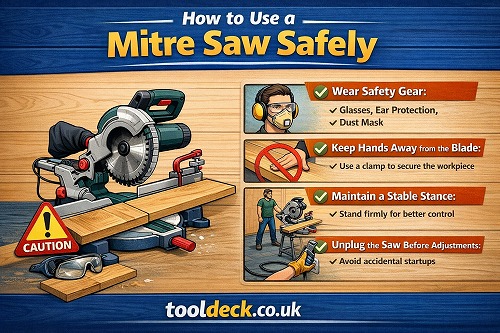
Using a mitre saw can dramatically improve the accuracy and speed of your woodworking projects—but it also comes with serious risks if used incorrectly. Whether you’re a DIY beginner or a professional tradesperson in the UK, understanding how to use a mitre saw safely is essential.
In this complete safety guide, you’ll learn step-by-step instructions, essential precautions, and expert tips to minimise risk and work confidently.
Why Mitre Saw Safety Matters
Mitre saws are powerful cutting tools with high-speed spinning blades. Without proper handling, they can cause:
- Severe cuts or injuries
- Kickback accidents
- Material damage
- Long-term hearing or eye issues
👉 The good news: most accidents are preventable with proper technique.
Essential Safety Gear (PPE)
Before using a mitre saw, always wear:
- Safety goggles – Protect your eyes from flying debris
- Hearing protection – Reduce noise exposure
- Dust mask – Prevent inhalation of sawdust
- Work gloves (optional) – For handling materials (not during cutting)
💡 UK Tip: Always follow HSE (Health and Safety Executive) guidelines when using power tools.
Step-by-Step: How to Use a Mitre Saw Safely
1. Inspect the Saw Before Use
Before turning on the machine:
- Check the blade is sharp and secure
- Ensure guards are working properly
- Confirm the saw is stable on a flat surface
- Remove any debris from the base
2. Set the Correct Angle
Adjust the mitre and bevel settings depending on your cut:
- Use angle locks securely
- Double-check measurements before cutting
👉 Incorrect setup can cause binding or inaccurate cuts.
3. Secure the Material Properly
- Place the workpiece firmly against the fence
- Use clamps when possible
- Never hold small pieces too close to the blade
👉 Movement during cutting = high risk of injury
4. Maintain Proper Hand Position
⚠️ Golden rule: Keep hands at least 150mm away from the blade
- Use the handle to control the saw
- Never cross your arms while cutting
- Keep your non-dominant hand clear of the cutting path
5. Start the Saw Before Contact
- Turn on the saw and let it reach full speed
- Slowly lower the blade into the material
- Do NOT force the cut
👉 Let the blade do the work
6. Complete the Cut Safely
- Lower the blade smoothly
- Wait until the blade stops spinning before lifting it
- Do not remove cut pieces until the blade stops
7. Switch Off and Clean Up
After finishing:
- Turn off and unplug the saw
- Clear sawdust and debris
- Store the tool safely
Common Mistakes to Avoid
❌ Cutting Freehand
Always use the fence—freehand cutting is extremely dangerous.
❌ Forcing the Blade
Pushing too hard can cause kickback or motor strain.
❌ Ignoring Blade Condition
A dull blade increases friction and risk of accidents.
❌ Poor Lighting
Always work in a well-lit environment.
Pro Safety Tips (Tradesmen Advice)
- Use a sliding mitre saw for larger materials instead of forcing cuts
- Install dust extraction to improve visibility
- Keep your workspace clean and organised
- Never rush—most accidents happen under pressure
UK Legal & Safety Considerations
In the UK, workplace safety is governed by the Health and Safety at Work Act 1974.
If you’re using a mitre saw professionally:
- You must follow proper safety procedures
- Employers must provide training and PPE
- Equipment must be maintained regularly
Who Should Use a Mitre Saw?
Safe for:
- DIY users (with proper guidance)
- Carpenters and joiners
- Construction professionals
Not recommended for:
- Children
- Untrained users without supervision
Final Thoughts
Learning how to use a mitre saw safely is not just about avoiding injury—it’s about improving accuracy, efficiency, and confidence in your work.
👉 Key takeaway:
- Always prioritise safety over speed
- Follow correct setup and handling
- Maintain your equipment regularly
With the right habits, a mitre saw becomes one of the most valuable and safe tools in your workshop.




Leave a Reply