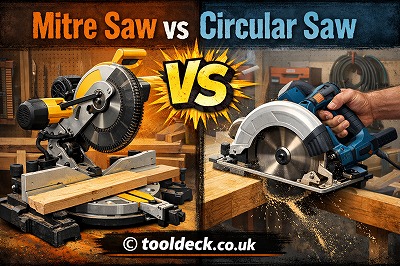
Choosing between a mitre saw vs circular saw depends on your project type: precision cutting vs versatility. A mitre saw delivers clean, accurate crosscuts, while a circular saw offers flexibility for a wide range of cuts.
This guide breaks down the key differences to help you pick the right tool.
What Is a Mitre Saw?
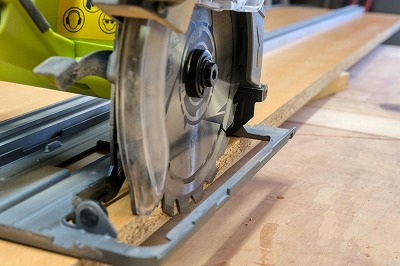
A mitre saw is a stationary cutting tool designed for making precise crosscuts and angled cuts.
Key features:
- Fixed base with pivoting blade
- Accurate angle cuts (mitre & bevel)
- Clean, repeatable results
👉 Best for precision woodworking tasks.
🔧 What Is a Circular Saw?
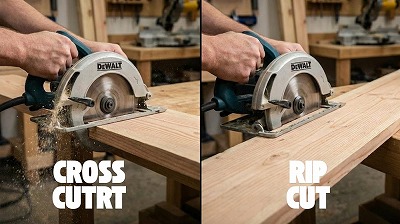
A circular saw is a portable power tool used for cutting wood and other materials.
Key features:
- Handheld and portable
- Suitable for long cuts (rip cuts)
- Adjustable depth and angle
👉 Ideal for DIY, construction, and on-site work.
Mitre Saw vs Circular Saw – Key Differences
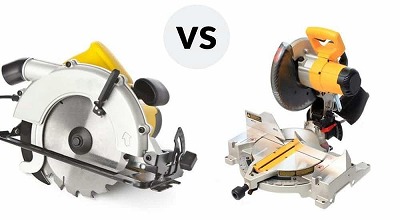
When comparing a mitre saw vs circular saw, the key differences come down to cutting accuracy, mobility, versatility, and type of work. While both tools use a spinning circular blade, they are designed for very different applications.
Below is a detailed breakdown of how they differ in real-world use.
1. Type of Cuts (Crosscut vs Rip Cut)
🔧 Mitre Saw:
- Designed primarily for:
- Crosscuts (cutting across the grain)
- Mitre cuts (angled cuts)
- Bevel cuts
- Compound cuts
- Ideal for:
- Skirting boards
- Trim work
- Framing
🔌 Circular Saw:
- Designed for:
- Rip cuts (cutting along the grain)
- Long straight cuts
- Sheet material cutting
🎯 Real Impact:
- Mitre saw = short, precise cuts
- Circular saw = long, flexible cuts
👉 Winner: Depends on task
- Precision & angles → Mitre saw
- Long straight cuts → Circular saw
2. Accuracy & Precision
🔧 Mitre Saw:
- Fixed cutting path
- Built-in fence and guides
- Extremely accurate and repeatable
🔌 Circular Saw:
- Handheld operation
- Accuracy depends on:
- User skill
- Use of guide rail
🎯 Real Impact:
- Mitre saw = clean, perfect cuts every time
- Circular saw = good, but less consistent
👉 Winner: Mitre Saw
3. Portability & Workspace
🔧 Mitre Saw:
- Stationary tool
- Requires:
- Workbench
- Dedicated space
🔌 Circular Saw:
- Lightweight and portable
- Easy to use on-site
🎯 Real Impact:
- Mitre saw = workshop tool
- Circular saw = job-site tool
👉 Winner: Circular Saw
4. Versatility
🔧 Mitre Saw:
- Specialised for:
- Accurate angle cuts
- Limited for large materials
🔌 Circular Saw:
- Highly versatile:
- Wood
- Plywood
- MDF
- Even some metals (with blade change)
🎯 Real Impact:
- Mitre saw = specialist
- Circular saw = multi-purpose
👉 Winner: Circular Saw
5. Cutting Capacity
🔧 Mitre Saw:
- Limited by:
- Blade size
- Sliding range
- Best for smaller workpieces
🔌 Circular Saw:
- Can cut:
- Large boards
- Full sheets
- No size limitation (practically)
🎯 Real Impact:
- Mitre saw = limited capacity
- Circular saw = unlimited flexibility
👉 Winner: Circular Saw
6. Ease of Use
🔧 Mitre Saw:
- Simple operation:
- Lower blade → cut
- Very beginner-friendly
- High control
🔌 Circular Saw:
- Requires:
- Steady hands
- Control of direction and speed
🎯 Real Impact:
- Mitre saw = easier learning curve
- Circular saw = more skill required
👉 Winner: Mitre Saw
7. Speed & Productivity
🔧 Mitre Saw:
- Extremely fast for:
- Repeated cuts
- Batch work
🔌 Circular Saw:
- Slower for repetitive cutting
- Faster for large sheet cuts
🎯 Real Impact:
- Mitre saw = production efficiency
- Circular saw = flexibility
👉 Winner:
- Repetition → Mitre saw
- Large cuts → Circular saw
8. Angle Cutting Capability
🔧 Mitre Saw:
- Built specifically for angle cuts
- Adjustable mitre and bevel settings
- High precision
🔌 Circular Saw:
- Can bevel (tilt blade)
- Harder to maintain exact angle
🎯 Real Impact:
- Mitre saw = perfect angle accuracy
- Circular saw = acceptable but less precise
👉 Winner: Mitre Saw
9. Safety & Control
🔧 Mitre Saw:
- Fixed cutting area
- Workpiece supported
- Lower risk of kickback
🔌 Circular Saw:
- Higher risk of:
- Kickback
- Slipping
- Requires more attention
🎯 Real Impact:
- Mitre saw = safer for controlled cuts
- Circular saw = requires experience
👉 Winner: Mitre Saw
10. Cost & Value
🔧 Mitre Saw:
- Higher upfront cost
- Best value for workshop users
🔌 Circular Saw:
- More affordable
- Great for general use
🎯 Real Impact:
- Mitre saw = investment tool
- Circular saw = everyday tool
👉 Winner: Circular Saw (for most users)
The difference between a mitre saw vs circular saw comes down to precision vs versatility. A mitre saw delivers accurate, repeatable cuts, while a circular saw offers flexibility, portability, and wider application.
Choosing the right tool depends on whether your priority is clean, precise cuts or all-purpose cutting ability.
📊 Quick Comparison Table
| Feature | Mitre Saw | Circular Saw |
|---|---|---|
| Accuracy | ⭐⭐⭐⭐⭐ | ⭐⭐⭐ |
| Portability | ⭐⭐ | ⭐⭐⭐⭐⭐ |
| Versatility | ⭐⭐⭐ | ⭐⭐⭐⭐⭐ |
| Ease of Use | ⭐⭐⭐⭐⭐ | ⭐⭐⭐ |
| Long Cuts | ❌ | ✅ |
| Angle Cuts | ✅ | ✅ |
When to Choose a Mitre Saw
Choose a mitre saw if you:
- Need precise angle cuts
- Work with trim, skirting, framing
- Want repeatable accuracy
- Work in a workshop
👉 Best for carpentry and finish work.
When to Choose a Circular Saw
Choose a circular saw if you:
- Need portability
- Cut large sheets or long boards
- Work on-site
- Want versatile tool
👉 Best for DIY and construction.
❌ Common Mistakes to Avoid
❌ Using circular saw for precision cuts without guide
✔ Use guide rail
❌ Using mitre saw for long cuts
✔ Use circular saw
❓ FAQs
Which is better for beginners?
Mitre saw.
Can a circular saw replace a mitre saw?
Partially, but less accurate.
Which is better for cutting angles?
Mitre saw.
Which is more versatile?
Circular saw.
Final Thoughts
When comparing mitre saw vs circular saw, the choice depends on your needs: precision vs versatility. A mitre saw is perfect for accurate, repeatable cuts, while a circular saw offers flexibility for a wide range of tasks.




Leave a Reply