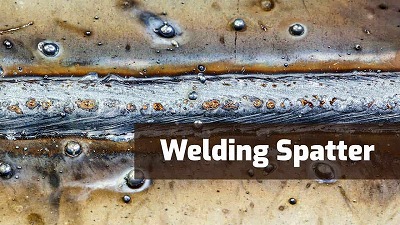
If you’ve ever finished a weld and noticed tiny metal droplets scattered all around your workpiece, you’ve already met spatter—and probably weren’t thrilled about it. In stick welding (SMAW), spatter refers to molten metal particles that are ejected from the weld pool during the welding process. These droplets cool quickly and stick to nearby surfaces, leaving behind a rough, messy finish that often requires grinding or cleaning.
Think of it like frying oil splattering out of a pan—except instead of oil, it’s molten metal flying at high temperatures. That’s not just messy; it’s inefficient and potentially dangerous. While a small amount of spatter is normal in stick welding, too much spatter is a clear sign that something isn’t right—either with your settings, your technique, or your materials.
Understanding spatter isn’t just about aesthetics. It directly impacts productivity, weld integrity, and post-weld cleanup time. If you’re constantly dealing with excessive spatter, you’re likely wasting both time and consumables. So, getting a handle on what causes it is the first step toward cleaner, more professional welds.
Why Spatter Matters in Welding Quality
Spatter isn’t just an annoyance—it’s a red flag. Excessive spatter often signals poor arc stability, incorrect settings, or contamination in your materials. And while you might be tempted to brush it off as “just part of stick welding,” ignoring it can lead to deeper issues.
Heavy spatter can weaken weld appearance and even mask defects like porosity or incomplete fusion. It also increases the need for post-weld cleaning, which eats into your productivity. In industrial settings, this can translate into higher labour costs and reduced efficiency.
From a safety perspective, spatter can also be hazardous. Those hot metal droplets can burn skin, damage equipment, or even ignite nearby flammable materials. So, reducing spatter isn’t just about achieving a cleaner weld—it’s about working smarter and safer.
Main Causes of Excessive Spatter in Stick Welding
Incorrect Amperage Settings
One of the biggest culprits behind excessive spatter is incorrect amperage. If your current is too high, the electrode melts too quickly, causing molten metal to be violently expelled from the arc. The result? A shower of spatter that lands everywhere except where you want it.
On the flip side, too little amperage can also cause problems. The arc becomes unstable, leading to inconsistent metal transfer and—you guessed it—spatter. It’s a delicate balance, and finding that sweet spot is crucial for clean welding.
Many beginners overlook this and assume more power equals better penetration. But in reality, overpowering your weld often leads to more harm than good. Always refer to the electrode manufacturer’s recommended amperage range and adjust based on your material thickness.
Poor Electrode Choice
Not all electrodes are created equal. Choosing the wrong one for your application can significantly increase spatter. For example, E6010 electrodes are known for their aggressive arc and deeper penetration—but they also tend to produce more spatter compared to smoother rods like E7018.
Each electrode type has its own characteristics, including arc stability, slag formation, and spatter levels. Using an electrode that doesn’t match your base material or welding position can lead to poor results.
If you’re aiming for cleaner welds with minimal spatter, you’ll want to select electrodes designed for smoother operation. Low-hydrogen rods like E7018 are often preferred for their stable arc and reduced spatter output.
Arc Length Issues
Arc length is another critical factor that many welders underestimate. A longer arc increases voltage and creates a more erratic arc, which leads to—you guessed it—more spatter. It’s like trying to control a hose with too much pressure; things get messy quickly.
Keeping a short, consistent arc length helps maintain stability and reduces the chances of molten metal being ejected from the weld pool. Ideally, your arc length should be roughly equal to the diameter of your electrode core.
If you notice excessive popping or irregular arc sounds, it’s often a sign that your arc length is too long. Tightening it up can make a dramatic difference in spatter control.
Dirty or Contaminated Metal Surface
Welding on a dirty surface is like trying to paint over rust—it just doesn’t work well. Oil, rust, paint, and moisture can all interfere with the welding arc and cause spatter.
Contaminants vaporise under high heat, creating gas pockets that disrupt the arc and lead to unstable metal transfer. This instability often results in increased spatter and poor weld quality.
Taking a few minutes to properly clean your workpiece—whether by grinding, wire brushing, or using solvents—can significantly reduce spatter and improve overall results.
How Amperage Affects Spatter Formation
Signs Your Amperage Is Too High
When your amperage is too high, the weld pool becomes overly fluid and difficult to control. You might notice excessive spatter, undercutting along the edges of the weld, and a loud, harsh arc sound. The electrode may also burn down faster than expected.
It’s a bit like driving a car at full throttle in a tight space—you lose control quickly. High amperage increases the force with which molten metal is expelled, leading to more spatter and a rougher finish.
If you’re seeing these signs, dial back the amperage slightly and observe how the arc behaves. Small adjustments can make a big difference.
Signs Your Amperage Is Too Low
Low amperage creates a weak, unstable arc that struggles to maintain consistent heat. This can cause the electrode to stick to the workpiece and produce erratic spatter.
You might also notice poor penetration and a lumpy weld bead. The arc may flicker or go out entirely, forcing you to restart frequently.
In this case, increasing the amperage gradually can help stabilise the arc and reduce spatter. Again, it’s all about finding that balance where the arc is smooth and consistent.
Choosing the Right Electrode to Reduce Spatter
Best Electrodes for Cleaner Welds
If your goal is to minimise spatter, electrode selection matters more than you might think. Some electrodes are specifically designed for smoother arcs and cleaner welds.
Here are a few commonly used options:
- E6013 – Easy to use, moderate penetration, relatively low spatter
- E7018 – Low hydrogen, smooth arc, minimal spatter
- E6011 – Good for dirty metal, but higher spatter
Each of these has its place, but for clean, professional-looking welds, E7018 is often the top choice. It produces a stable arc and smooth bead, making it ideal for structural work.
Comparing E6013 vs E7018
| Feature | E6013 | E7018 |
|---|---|---|
| Arc Stability | Good | Excellent |
| Spatter Level | Moderate | Low |
| Penetration | Medium | Medium-Deep |
| Ease of Use | Beginner-friendly | Requires skill |
| Applications | Light fabrication | Structural welding |
If you’re just starting out, E6013 might be easier to handle. But if you’re chasing cleaner welds with less spatter, E7018 is worth mastering.
The Role of Arc Length in Spatter Control
Maintaining the correct arc length is like holding the perfect distance when spray painting—too far, and you get overspray; too close, and things get messy. In stick welding, a short and steady arc is your best friend when it comes to reducing spatter.
A long arc increases voltage and destabilises the arc column, causing molten droplets to scatter unpredictably. This not only increases spatter but also reduces weld quality.
By keeping the arc tight and controlled, you ensure that the molten metal transfers smoothly into the weld pool rather than being flung outward. It takes practice, but once you develop the muscle memory, the improvement is noticeable.
Surface Preparation: The Hidden Factor
Many welders focus heavily on technique and settings but overlook one of the simplest fixes: cleaning the metal. It might not be glamorous, but it’s incredibly effective.
Removing rust, paint, oil, and moisture ensures that the arc remains stable and that the metal melts uniformly. This reduces the chances of gas pockets forming and causing spatter.
Think of it as preparing a canvas before painting. A clean surface allows for better adhesion, smoother results, and fewer imperfections. In welding, that translates to less spatter and stronger welds.
Welding Technique Mistakes That Increase Spatter
Travel Speed Problems
Your travel speed plays a surprisingly big role in spatter formation. Move too fast, and the arc doesn’t have enough time to properly fuse the metal, leading to erratic behaviour and spatter. Move too slow, and the weld pool becomes too large and unstable.
Finding the right speed is like pacing yourself during a run—it needs to be steady and controlled. A consistent travel speed helps maintain a stable arc and reduces spatter.
Incorrect Angle
The angle at which you hold the electrode also affects spatter. Too steep or too shallow, and you disrupt the flow of molten metal.
A typical drag angle of 10–15 degrees works well for most stick welding applications. Keeping the angle consistent helps direct the weld pool and minimise spatter.
Environmental Factors That Cause Spatter
Believe it or not, your environment can also influence spatter levels. Wind, humidity, and temperature can all affect the stability of your arc.
For example, strong airflow can disturb the arc and cause erratic metal transfer. Moisture in the air or on the electrode can lead to hydrogen contamination, increasing spatter and the risk of defects.
Working in a controlled environment and storing electrodes properly can help reduce these issues significantly.
Practical Tips to Reduce Stick Welding Spatter
Step-by-Step Fix Checklist
If you’re dealing with excessive spatter, here’s a quick checklist to get things back on track:
- Check and adjust your amperage
- Use the correct electrode for your job
- Maintain a short, consistent arc length
- Clean your workpiece thoroughly
- Control your travel speed and angle
- Store electrodes in a dry environment
Following these steps consistently can dramatically improve your weld quality and reduce spatter.
Best Equipment and Settings for Low-Spatter Welding
Investing in quality equipment can also make a difference. Modern inverter welders offer better arc control and stability compared to older transformer-based machines.
Look for features like arc force control and hot start, which help maintain a stable arc and reduce spatter. Pairing good equipment with proper technique creates the ideal conditions for clean welding.
Comparing Stick Welding vs MIG in Terms of Spatter
| Feature | Stick Welding | MIG Welding |
|---|---|---|
| Spatter Level | Moderate to High | Low |
| Ease of Use | Moderate | Easy |
| Cleanliness | Requires cleanup | Cleaner finish |
| Outdoor Use | Excellent | Limited |
While stick welding is versatile and works well outdoors, it naturally produces more spatter than MIG welding. However, with the right techniques, you can significantly reduce it.
FAQs
1. Is spatter completely avoidable in stick welding?
No, a small amount of spatter is normal, but excessive spatter can and should be reduced with proper technique and settings.
2. Which electrode produces the least spatter?
E7018 is widely known for producing minimal spatter due to its stable arc.
3. Does polarity affect spatter?
Yes, incorrect polarity can destabilise the arc and increase spatter. Always follow electrode recommendations.
4. Can dirty metal really cause that much spatter?
Absolutely. Contaminants disrupt the arc and lead to unstable metal transfer, increasing spatter.
5. Is MIG welding better for avoiding spatter?
MIG welding generally produces less spatter, but stick welding can still be clean with proper technique.
Conclusion
Excessive spatter in stick welding isn’t something you have to live with—it’s something you can fix. Whether it’s adjusting your amperage, choosing the right electrode, or refining your technique, small changes can lead to big improvements.
Once you understand the root causes, you gain control over the process. And when you control the process, you get cleaner welds, less cleanup, and better results overall. That’s what separates a beginner from a skilled welder.


Leave a Reply